

The MLB season is the longest, most relentless schedule in professional sport. Here is how the best performance departments keep players available when availability is everything.
No other professional sport asks this of its athletes: 162 regular-season games played across 187 days, with travel between cities on days that are supposed to be rest days, and a playoff run that can extend the schedule into November. The MLB season is not a sprint or even a marathon. It is an endurance test with no clear finish line, where the objective is not peak performance in a single moment but consistent, repeatable readiness across six months of daily competition.
For performance staff, this creates a problem unlike anything in football, basketball, or soccer. The question is not how to prepare athletes for a big match, or how to recover between fixtures that arrive every three or four days. The question is how to keep a pitching rotation healthy, how to manage cumulative lower-body fatigue in position players, and how to maintain strength and physical output in athletes who are playing, travelling, or preparing for a game every single day of the week.
The teams that answer this best do not do more. They do the right things more consistently, in environments that are rarely ideal, without adding to the load that is already the defining characteristic of the season.
The specific demands of a daily game schedule
Baseball's physical demands are often underestimated by those outside the sport. The cumulative stress on pitchers is well documented: shoulder and elbow structures absorbing the torque of a 95-mph fastball, repeated across starts that arrive every five days, with bullpen work adding volume in between. But the position player challenge is less visible and equally significant.
Catchers absorb contact on every play at the plate and spend nine innings in a stance that loads the knees and hips repeatedly. Infielders make reactive, high-intensity movements from a standing start, with the deceleration demands of diving stops and throws across the diamond. Outfielders sprint from a dead stop to track balls at the wall. All of it accumulates across a daily schedule with no week off, no mid-season break, and a travel itinerary that routinely places athletes in a different time zone every 48 hours.
The cumulative effect of this schedule is not dramatic or injury-precipitating in most cases. It is slow, grinding fatigue that degrades movement quality, reduces explosiveness, and incrementally increases the risk of the soft tissue events that can end a player's season. The performance challenge is not managing acute stress. It is managing chronic load across a calendar that never resets.

Why recovery cannot wait for a day off
In most team sports, performance staff can build recovery windows into the weekly schedule. There are training days and match days, and the gaps between them are where recovery happens. In baseball, there are no gaps. A team plays a three-game series, travels overnight, plays a four-game series in a different city, travels again. The recovery has to happen in the margins of a schedule that was not designed to accommodate it.
This changes the nature of the recovery intervention required. Tools that need a training ground, a dedicated session, or specialist supervision are structurally incompatible with how MLB teams move through a season. What works is what travels, what deploys without setup, and what delivers its effect regardless of what else is happening in the day.
Post-game, players are in the clubhouse, on the bus, at the hotel. Pre-game, they are in the batting cage, at the tee, running their preparation routine. Travel means flights, terminals, and hotel lobbies at two in the morning. The recovery intervention that reaches players in all of these environments is the one that actually gets used. The one that requires a clinic does not.
What BFR offers the MLB performance model
Blood flow, specifically how effectively circulation clears fatigue by-products and resupplies working tissue, is the variable that determines how well a player recovers between games.
Blood Flow Restriction has particular relevance for the baseball context because it's a direct, practical way to influence that variable, addressing the two specific demands the sport creates most reliably: maintaining training stimulus without adding joint stress and accelerating recovery within the compressed windows that the schedule allows.
For pitchers managing cumulative arm fatigue, BFR offers a way to maintain the anabolic stimulus associated with strength training at loads of 20 to 30 per cent of one-rep maximum, without the mechanical and systemic stress of heavy loading. Research demonstrates that low-load BFR training produces meaningful gains in muscle strength and hypertrophy comparable to higher-load work.
For an athlete whose shoulder and elbow are already absorbing significant stress across a five-day pitching cycle, the ability to maintain physical output without adding throwing or joint load is not a marginal benefit. It is the difference between a training stimulus that is sustainable across 162 games and one that is not.
For position players, the recovery application is equally direct. Passive Recovery BFR, applied at low pressure during rest or low-intensity activity, drives circulation through fatigued lower limbs and supports the removal of the metabolic by-products that accumulate across daily game loads.

Managing travel and maintaining readiness
The travel demands of the MLB schedule create a recovery problem that goes beyond simple fatigue. Time zone changes, late-night arrivals, and the circulatory effects of extended air travel all compound the physical load of daily competition. Intermittent occlusion during travel has been shown to improve lower-limb perfusion on reperfusion, reducing the pooling and stiffness that accumulates during long flights.
For a team travelling overnight between series, the ability to deliver a recovery stimulus during the journey itself means players arrive in a better physical state for the next game's preparation.
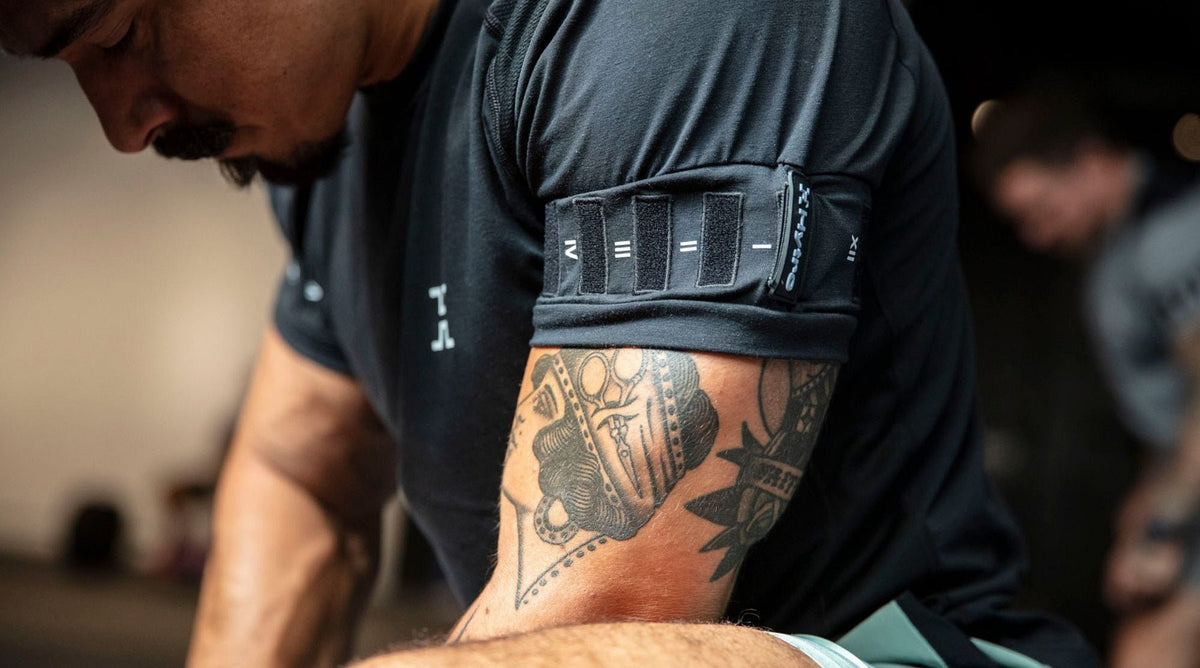
Hytro's wearable design makes this practical in a way that traditional cuff-based systems cannot. No pumps, no individual calibration, no supervision required. A player can wear Hytro BFR on the plane, in the hotel lobby, or during the film session that follows a late arrival, delivering the restriction-and-release stimulus in environments where no other recovery modality is viable. For performance staff managing a 26-man roster across a cross-country travel schedule, this is the operational difference between a recovery protocol that works in theory and one that works in practice.
Availability over heroics
The performance philosophy that defines the best MLB organisations is one that prioritises consistent availability over peak output on any individual day. A player who is at 90 per cent across 150 games contributes more than one who peaks at 100 per cent for 100 games and misses the rest. The cumulative arithmetic of a 162-game season means that every game missed, every player limited in preparation, every start skipped by a pitcher who needed one more day, is a compound loss that builds across the season.
This is the performance environment that BFR was built for. Not the dramatic intervention, not the session that produces a measurable single-day gain, but the quiet, consistent stimulus that reduces the rate of physical degradation across a schedule that never stops. Arm care without joint stress. Lower-body recovery during travel. Strength maintenance at low load across congested stretches. None of it is headline-making. All of it compounds across 162 games into a roster that is available, ready, and still performing in September when the playoff picture is being decided.
The teams that win the World Series are rarely the ones who peaked earliest. They are the ones whose performance departments found a way to protect their players through the grind of a season that tests every other approach to its limit.

Leave a comment
This site is protected by hCaptcha and the hCaptcha Privacy Policy and Terms of Service apply.