
In baseball, availability is built around one simple question: how quickly can a player be ready to throw again?
Across a long season, the accumulation of stress through the shoulder and elbow is constant. It does not always manifest as injury, but it shapes how players train, recover, and manage workloads between games. The margin is often small. A player may be available, but not at their best. Over time, those small margins compound.
For performance staff, the challenge is not just recovery. It is restoring readiness within a defined window, often with limited time, limited control, and competing demands on the athlete.
How do pitchers recover between appearances?
Recovering between games and travel
Post-game and post-flight recovery has become one of the most consistent use cases for Blood Flow Restriction (BFR) in baseball environments.
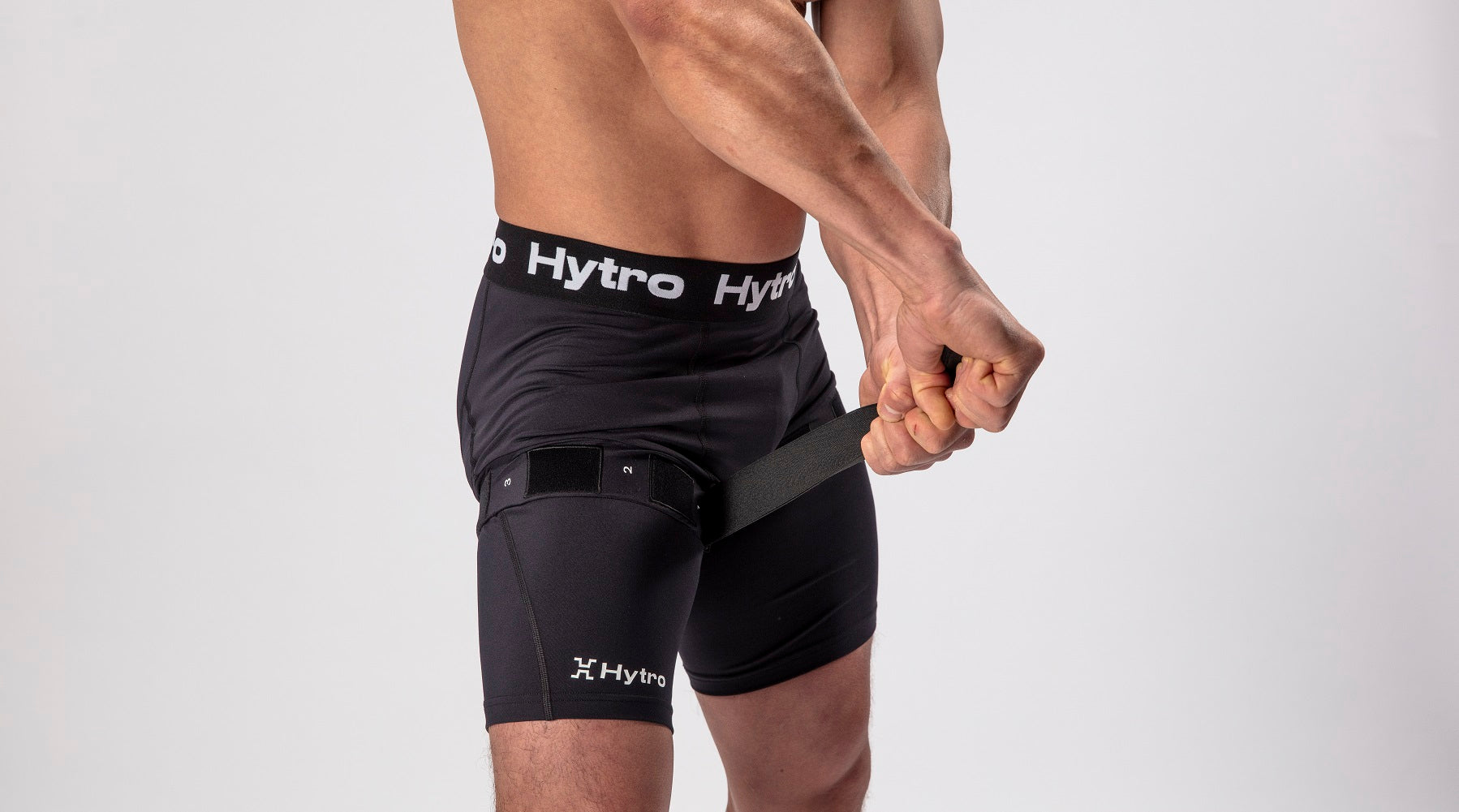
Following games or long travel days, players use Hytro BFR to restore circulation through the upper and lower limbs, reduce perceived soreness and stiffness, and support recovery without adding further load.
In a schedule where players can spend 10 to 12 hours at the ballpark and travel late into the night before returning the next day, recovery cannot rely on ideal conditions. It has to fit into the reality of the schedule.
As high-performance coach Brian Buck explains, “there’s things that they can do passively… things they can do while they’re scrolling their phone”
That simplicity is what allows recovery strategies to become consistent, rather than occasional. It shifts recovery from something planned to something embedded into the day.

What affects throwing readiness most in-season?
Managing upper-limb stress
Where BFR becomes more specific to baseball is in how it supports the upper limb.
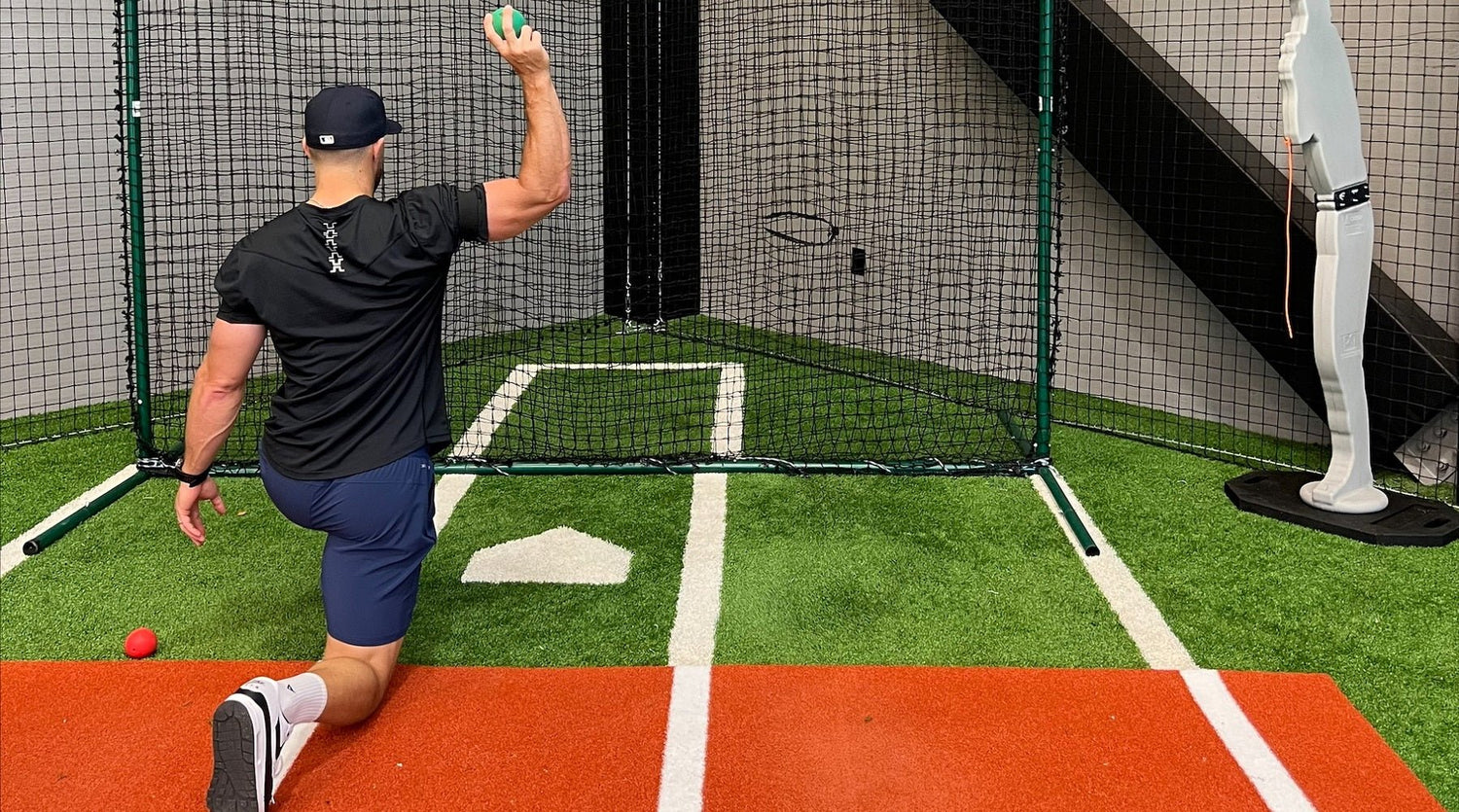
Throwing places repeated stress on the shoulder and elbow, particularly for pitchers and high-volume fielders. Managing that stress is not just about reducing load, but about maintaining tissue quality and readiness between appearances.
Even the routines designed to protect the arm carry a cost. As Buck notes, “everything has a cost… even your basic routine, your band work… that all has a cost volume-wise, fatigue wise.”
Over time, that accumulated volume adds up, particularly across dense stretches of games where recovery windows are compressed.
Rather than adding more, the focus shifts to getting more from what is already being done. Integrating BFR into existing arm care and recovery routines allows players to target the upper limb without additional mechanical stress, maintain circulation and tissue quality, and reduce unnecessary volume while preserving the effect.
This is not about replacing routines but refining them. Small changes in how those routines are delivered can have a meaningful impact across the week.
How do you maintain arm strength during a long season?
The 48-hour window
The difference between being available and unavailable is often measured in hours, not days.
In-season, the focus shifts away from building and towards maintaining. As Buck describes, “there’s a minimal effective dose… you can touch a threshold once or twice a week to maintain a lot of these qualities and then get out”
That same principle applies to recovery.
Rather than large, isolated interventions, the focus becomes smaller, consistent inputs that support the athlete across each phase of the recovery window. Immediately post-game, the aim is to begin restoring circulation. In the hours that follow, and into the next day, the goal is to maintain that process without adding further fatigue.
By supporting circulation immediately post-game and maintaining it through the following 24 to 48 hours, BFR helps bridge the gap between appearances. It does not replace throwing programmes or strength work, but it supports them, allowing players to return to those activities in a better state.

Where Hytro BFR fits
Hytro BFR is not used as a standalone intervention, but as part of the weekly rhythm. It supports post-game recovery, travels with the athlete to manage the effects of long-haul schedules, and integrates into light upper-limb work between appearances to maintain readiness without adding load.
In practice, this often means it appears in multiple touchpoints across the week. It may be used in the clubhouse immediately after a game, during travel where movement is limited, or as part of low-load arm care work between appearances. Each use is small in isolation, but together they create a consistent layer of support.
Rather than increasing volume, it enhances what is already in place. Over time, this consistency allows players to move through each cycle in a better state, rather than trying to recover all at once.
Maintaining availability across the season
Across a long baseball season, the goal is not to eliminate fatigue. It is to manage it.
Performance is rarely lost in a single moment. It is eroded gradually through accumulated stress, reduced recovery, and missed opportunities to restore readiness.
Hytro BFR provides a way to interrupt that process without adding to the overall load. By supporting recovery and maintaining readiness, it helps players stay available, which ultimately underpins performance.
Staying ready is one thing. Performing when it counts is another. See how Brian Buck uses BFR to help baseball players hit harder, run faster and recover smarter. Or learn more about BFR for baseball.


Leave a comment
This site is protected by hCaptcha and the hCaptcha Privacy Policy and Terms of Service apply.