
The soccer season is rarely linear. Periods of fixture congestion, travel, and reduced training time are part of the calendar. Midweek games, short turnarounds, and long journeys all shape how teams prepare. In these moments, the challenge is not building new physical qualities but maintaining the ones already in place. Strength is often one of the first to be compromised.
How do players manage travel fatigue during the season?
Recovering between games and travel
Post-game and post-flight recovery has become one of the most consistent use cases for Blood Flow Restriction (BFR) in elite soccer environments.
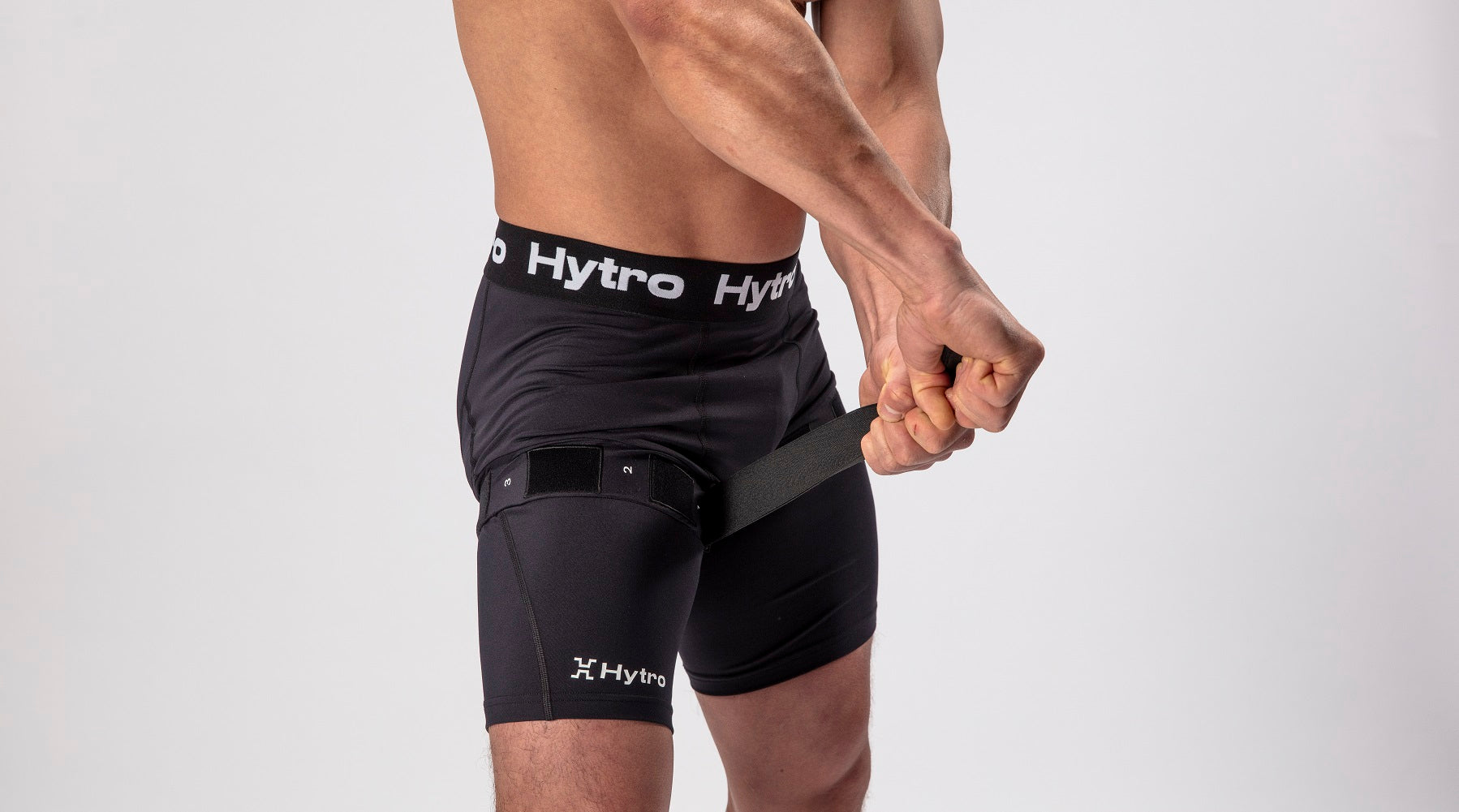
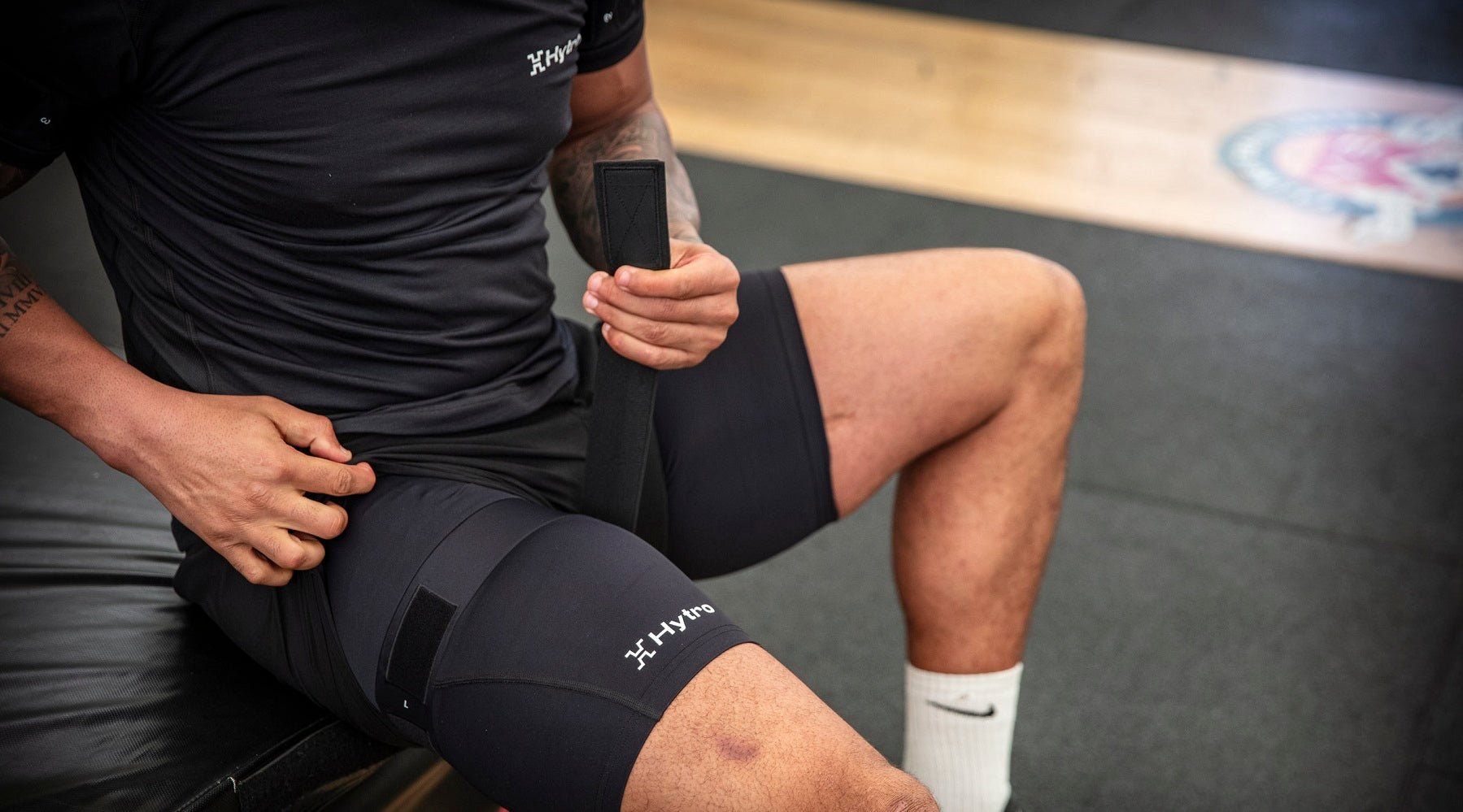
Following matches and travel, players use Hytro BFR to restore circulation, reduce soreness and stiffness and support recovery without adding further load.
In environments like Perth Glory FC, where players can travel up to 70–80,000 km across a season, recovery is not just about what happens at the training ground. It has to travel with the athlete.
Flights ranging from three to eight hours, often one or two days before a match, leave limited time to reset physically. In this context, recovery tools must be practical, portable, and easy to apply within tight schedules. BFR allows players to stimulate circulation during travel and immediately on arrival, helping them step into match preparation in a better state.

How do soccer players maintain strength during fixture congestion?
When training time is limited
During congested schedules, traditional strength sessions are often reduced or removed entirely.
There is less time between games, more emphasis on tactical preparation, and a greater need to manage fatigue. Over time, this creates a gap. Without sufficient stimulus, strength and muscle mass can begin to decline.
This is not always visible week to week, but across a block of fixtures, the impact becomes clear.
BFR provides a practical way to maintain that stimulus.
By using low-load protocols, practitioners can:
- Preserve strength qualities
- Maintain muscle mass
- Reduce mechanical and systemic fatigue
All within shorter, more flexible sessions that fit around match demands.
What is the best way to recover between soccer matches?
Recovery as a performance strategy
At elite clubs like Manchester City Women's Football Club, recovery is not treated as a separate phase. It is part of the performance model.
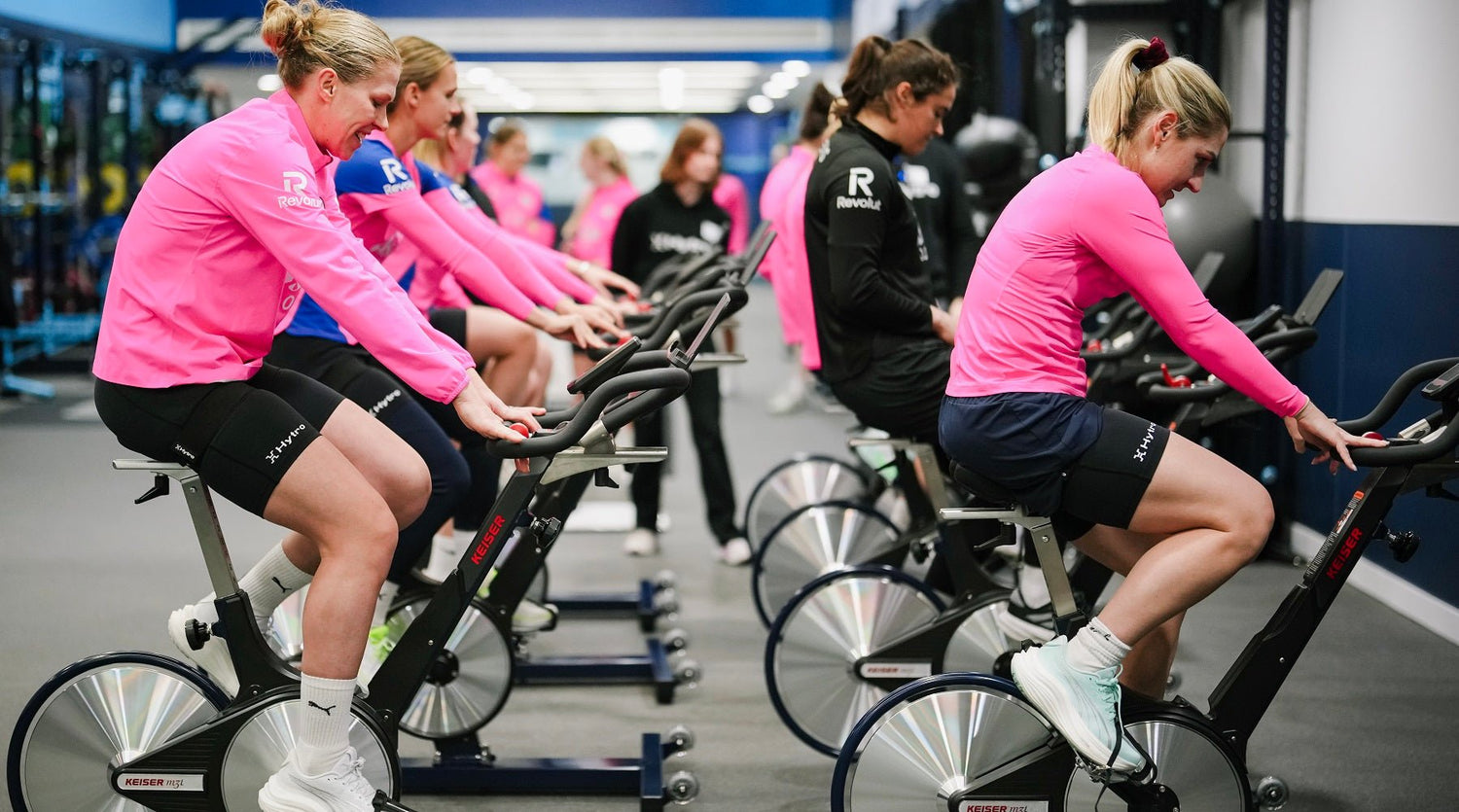
Led by practitioners like Emma Deakin, recovery is individualised, proactive, and embedded across the week. Players are not prescribed a single approach but given a range of options aligned to how they feel and what they need.
As Deakin explains, the goal is to “match the modality of recovery to the modality of fatigue.” That might mean addressing inflammation, managing travel fatigue, or restoring energy systems, depending on the context.
Within that model, BFR has become both a tool and a habit.
Players use it actively on the bike post-match, passively during low-effort recovery, and even alongside other modalities such as cold-water immersion. Because many have been exposed to it through rehab, it carries immediate trust. It feels familiar, and importantly, it works.
That combination of familiarity and flexibility drives consistency, which is what ultimately supports performance.

How do teams maintain physical qualities across a long soccer season?
Maintaining physical qualities across the season
The challenge in football is not building strength in isolation. It is maintaining it across the demands of the season.
During congested periods, players can rarely train optimally. Sleep may be disrupted, travel accumulates, and training time is reduced. In these conditions, maintaining exposure to key physical stimuli becomes critical.
BFR Training allows players to continue receiving meaningful stimulus even when training time is limited, fatigue is elevated, and load needs to be carefully managed.
Where Hytro BFR fits
Hytro BFR is not used as a standalone intervention, but as part of the weekly rhythm. It supports post-game recovery, travels with the athlete to manage the effects of congested schedules, and integrates into short, low-load sessions when full training is not possible.
In practice, this might include post-match recovery routines, in-flight use during travel, or brief strength maintenance sessions between fixtures. Each use is small in isolation, but together they create a consistent layer of support across the week.
Rather than increasing volume, it enhances what is already in place. This allows players to maintain readiness across dense periods, rather than losing ground and trying to rebuild later.

Maintaining more, more often
Success across the soccer season is built on availability and consistency. The teams that perform best are not always the ones doing more, but the ones maintaining more, more often, within the constraints of the schedule.
Hytro BFR supports that approach. By allowing players to recover effectively and maintain physical qualities without increasing load, it helps teams navigate the most demanding phases of the season without compromising performance.
What does effective strength work actually look like in a high-performance soccer environment? Take a closer look at how Martin Nugent Elite Performance builds pitch-ready players using BFR .Or learn more about BFR for soccer.

Leave a comment
This site is protected by hCaptcha and the hCaptcha Privacy Policy and Terms of Service apply.