
In football, recovery is not a side task, it is part of the performance model.
Between game-day collisions, in-season fatigue, and the constant need to keep players physically ready across a full roster, the challenge is not simply helping one athlete recover well. It is creating a system that supports consistent recovery exposure across the squad, without disrupting football work or overloading staff.
That is where Performance Blood Flow Restriction (BFR) is becoming increasingly valuable.
How do NFL players recover between games in-season?
Game day +1 and the demand for recovery at scale
One of the clearest use cases for BFR in football is game day +1, when soreness usually peaks. It is about restoring circulation, reducing the residual effects of contact, and helping players move into the next phase of the week in a better state. For some, that may mean recovering from high snap counts and repeated collisions. For others, it may mean maintaining physical exposure during a period where total football load is lower.
The challenge for practitioners is doing this consistently across an entire roster.
That is something John Griffin, Director of Player Performance at the Atlanta Falcons, understands well. In camp alone, roster numbers can swell dramatically, with players sitting in very different categories in terms of game exposure, training demand, and readiness needs. As he explains, the goal is not simply to keep players fit, but to ensure they are ready to perform when it matters most.
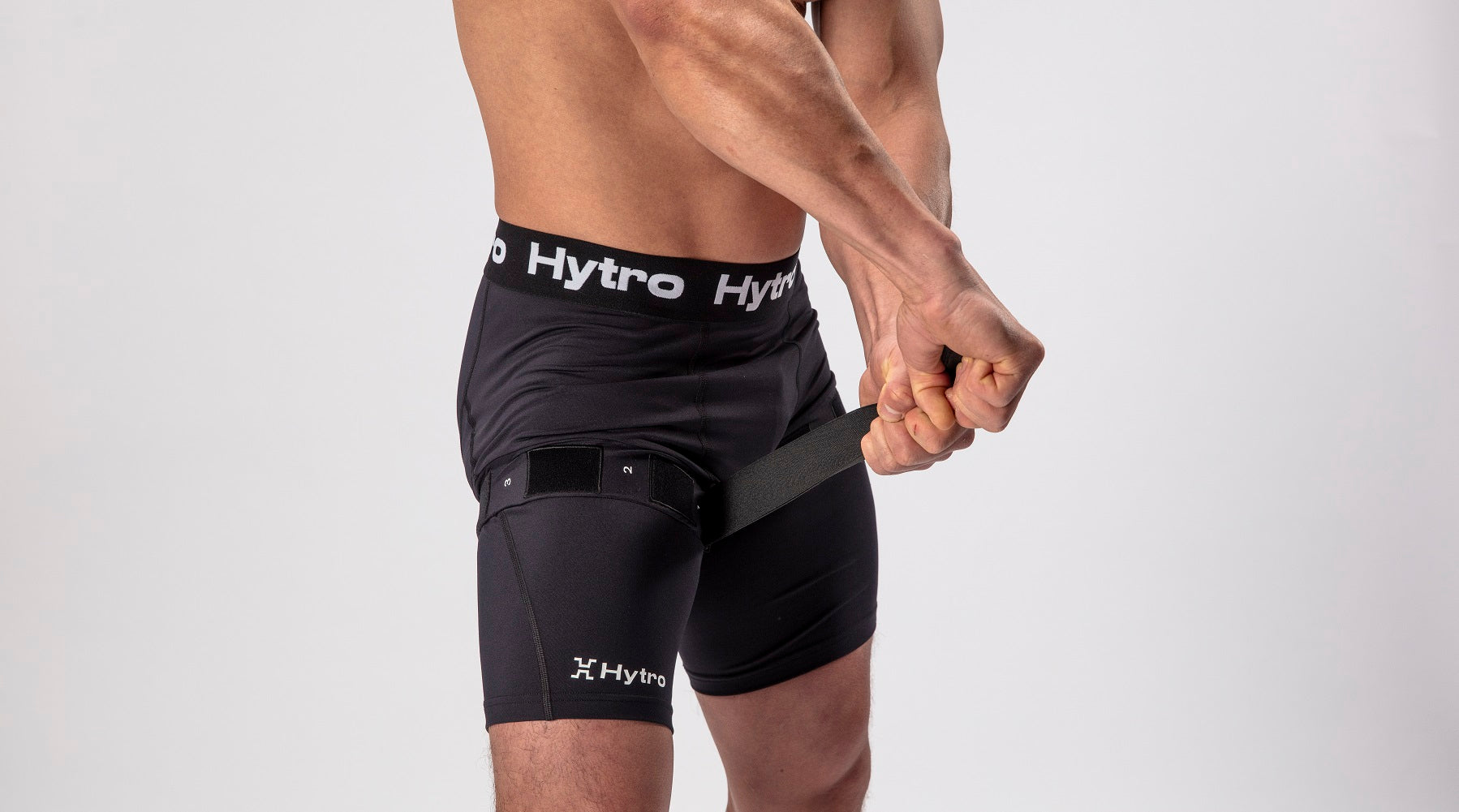
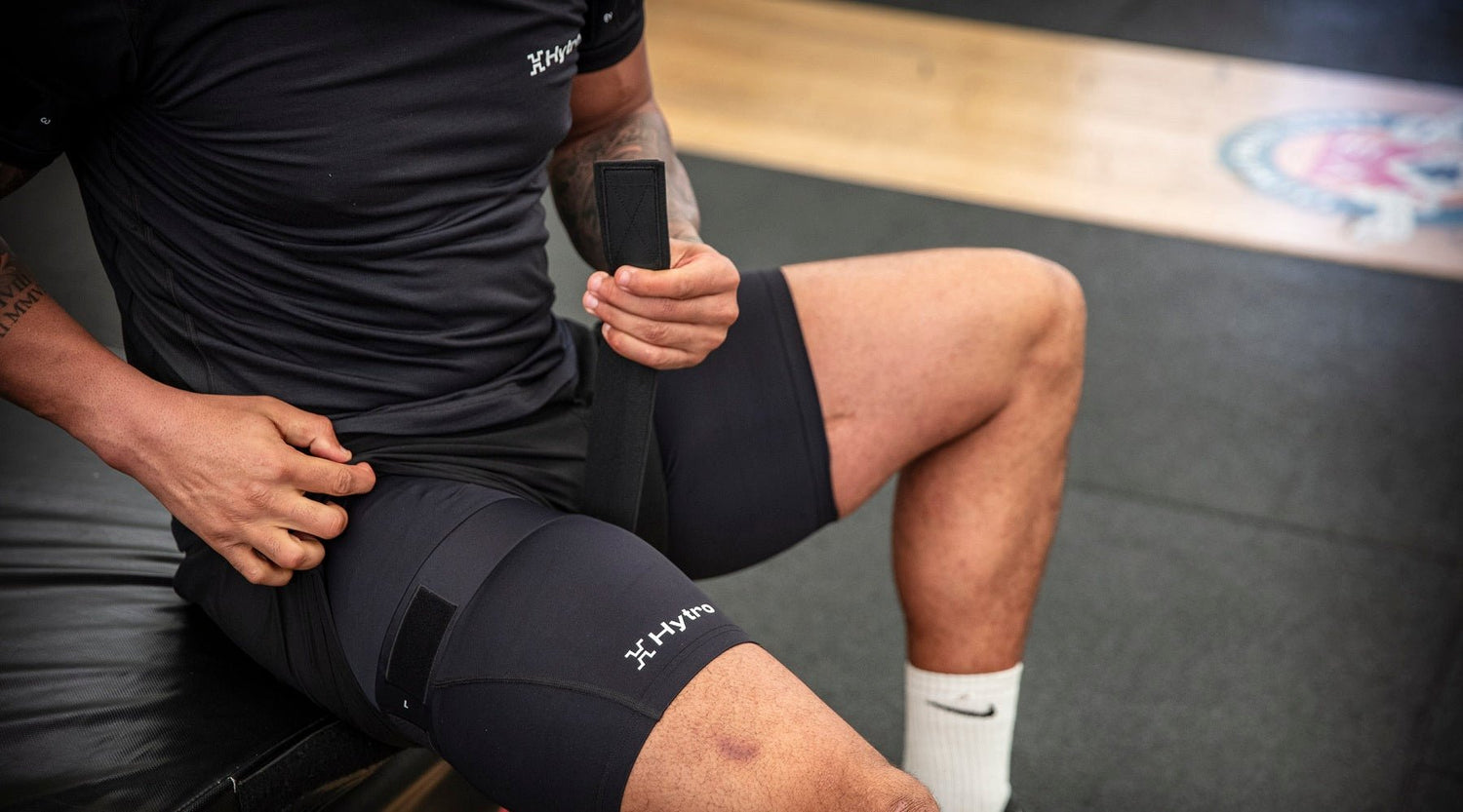
Within that context, Hytro BFR has become a practical way to deliver recovery and in-season support across the group. John notes that the challenge was never belief in BFR itself, but the ability to scale it. “We loved the research and the feedback from athletes, but with the old Delphi units it just was not possible to deploy at scale. When Hytro came along, it solved the problem. Suddenly we could roll it out to 50 or 90 players at once.”
That matters in football because scale matters. A recovery tool only becomes truly valuable when it fits the environment it is meant to support.

How do NFL teams scale recovery across a 90-player roster?
Supporting recovery without reducing football work
In-season, the priority is rarely adding more. Players still need to recover well, maintain muscle, and stay physically prepared, but without compromising the football work that defines performance. BFR helps bridge that gap by allowing teams to support recovery and maintain useful physiological stimulus without adding significant mechanical stress or increasing staff demands.
This is where game day +1 one use becomes particularly effective. Rather than creating new sessions or complex interventions, Hytro BFR can be integrated into active recovery work already taking place. It gives practitioners a way to support circulation, reduce soreness, and maintain exposure in a format that players can actually use consistently.
John’s thinking reflects that wider performance principle. “We try to be as pre-emptive as possible. We want to bake recovery into our schedules, create the right waves through the season, and then focus on the five to ten players who might need extra support. If you’re making wholesale changes mid-season, the system is already broken.”
That is what makes BFR so relevant in football. It is not there to rescue a broken model. It is there to strengthen a good one.
What does true readiness look like in an NFL season?
Pre-game readiness without added fatigue
The second major opportunity in football is preparation. Pre-game warm-ups need to achieve a lot in a short space of time. Players need to feel explosive and ready for high-force efforts, but without accumulating unnecessary fatigue before the game has even started. They also need to prepare joints and soft tissue for the collision demands that come with the sport.
That balance is difficult to get right, especially across a large squad with limited staff time.
Used in an ischaemic preconditioning-style approach, Hytro BFR offers a practical solution. It can support explosive readiness and short-sprint potentiation across the squad without adding more running, jumping, or staff-led setup. That is part of its appeal in football. It gives coaches a way to lift readiness without adding more cost.
This is especially useful in environments where simplicity drives adherence. John is clear on that point. “Simplicity is number one. If it’s too complex, it won’t stick. Hytro fit straight into our existing framework, and that has been key to adoption.”
That ease of integration matters just as much before a game as it does the day after one. If a warm-up tool is too complicated, too individualised to deploy quickly, or too demanding on staff, it becomes difficult to use consistently. Hytro BFR works because it fits the rhythm of the environment.

A tool that matches the demands of the sport
Football places unique demands on athletes and staff. It is not just the intensity of the sport, but the number of bodies to manage, the variety of roles within a roster, and the need to make efficient decisions under pressure. Some players need more recovery. Some need more exposure. Some need both at different points in the same week.
That is why practicality matters so much.
Hytro BFR gives practitioners a tool that can move between recovery and preparation without changing the whole system around it. On game day +1, it can support active recovery and in-season load management. Later in the week, it can be used as part of a pre-game warm-up strategy to help players feel ready, explosive, and physically prepared for collision demands.
Rather than creating more moving parts, it helps connect the ones already there.
Where Hytro BFR fits
Hytro BFR is not used in football as a standalone intervention, but as part of the weekly structure. It supports recovery the day after games, when the goal is to reduce soreness and maintain useful physical exposure across the roster, and it also has a role later in the week when players need to feel sharp, reactive, and ready to perform.
In practice, that means it can be deployed across large groups without heavy setup, giving staff a consistent way to influence readiness without increasing operational complexity. That is a major part of its value in football. It does not ask teams to build a new process around it. It strengthens the one they already have.

Execution is what makes it work
The best performance systems are not built on ideas alone. They are built on execution.
That is something John returns to clearly. “We can design the best templates in the world, but if we don’t execute at a high level, it means nothing. Execution is the secret sauce.”
Hytro BFR fits this mindset well. The physiology matters, but so does the reality of getting something into players’ hands, embedding it into the week, and using it consistently enough to make a difference.
In football, that consistency is everything.
When recovery is built in, when readiness is supported without added fatigue, and when staff can scale those processes across a full roster, the result is not just better sessions. It is better availability, better preparation, and a stronger platform for performance across the season.
What does BFR actually look like in an NFL environment? Take a closer look at how Atlanta Falcons are applying it across their roster. Or learn more about BFR for football.



Leave a comment
This site is protected by hCaptcha and the hCaptcha Privacy Policy and Terms of Service apply.