
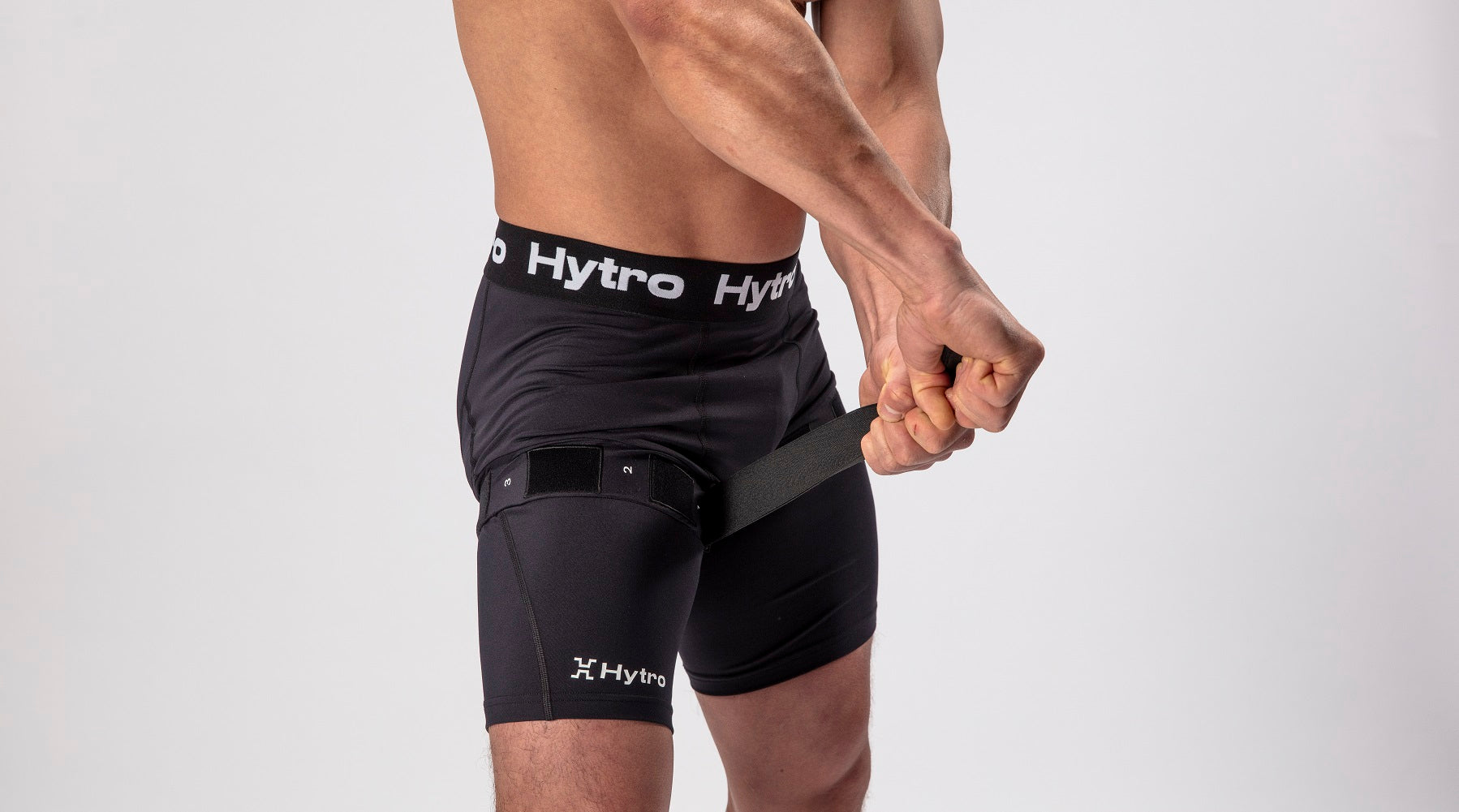
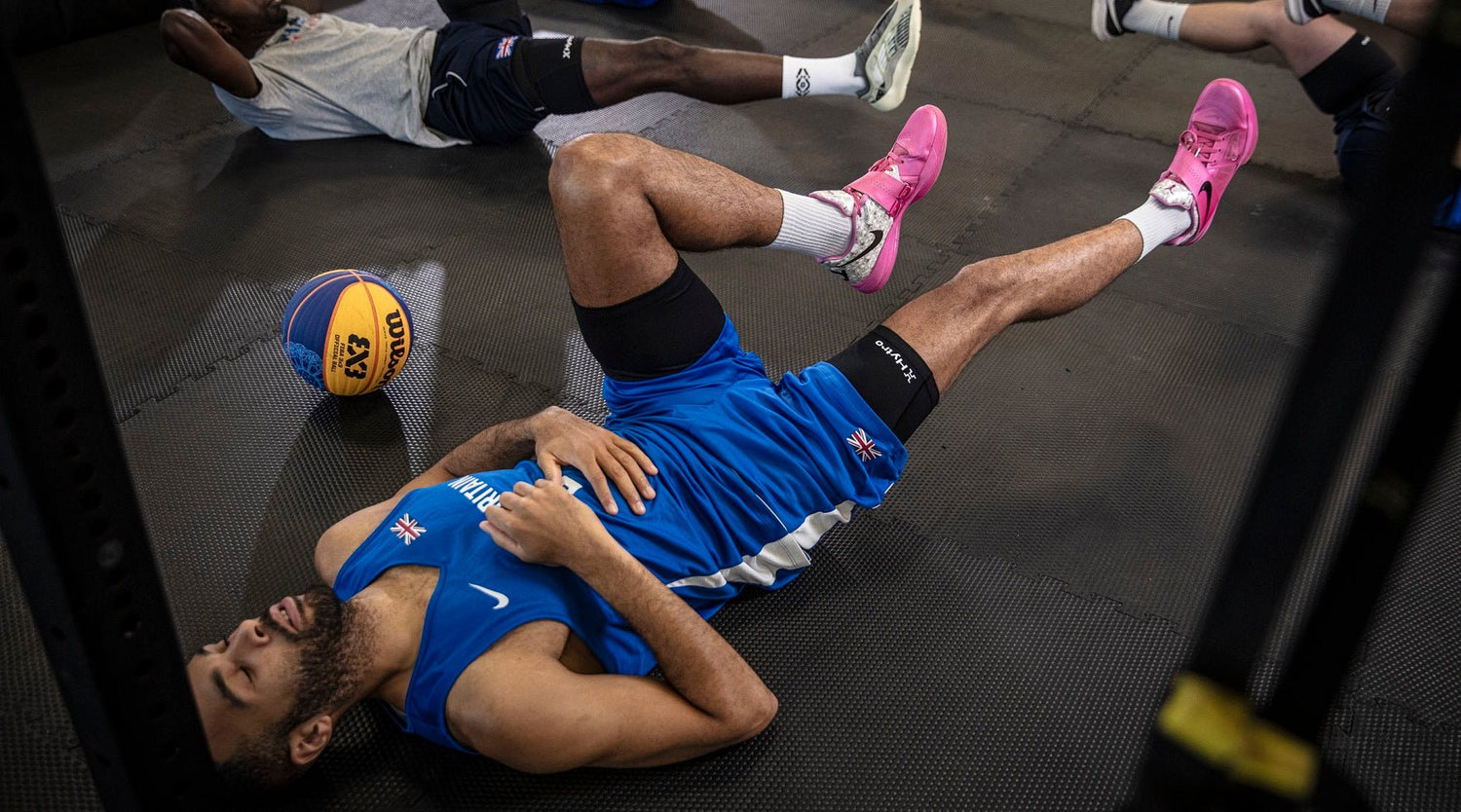
In basketball, preparation is a balance. Players need to be ready to sprint, jump and change direction at high intensity, often repeatedly across a game, without carrying unnecessary fatigue into performance.
The challenge is not just getting athletes ready but doing so without taking anything away. In dense schedules, that balance becomes harder to manage, and the margin between effective preparation and added fatigue becomes increasingly small.
How do basketball players recover between games and travel?
Recovering between games and travel
Before preparation comes recovery. Across packed schedules and frequent travel, basketball players are constantly managing accumulated fatigue. Post-game and post-flight recovery has become one of the most consistent use cases for Blood Flow Restriction (BFR) in these environments.
In practice, this often happens immediately after games, on the bus, or as part of simple routines the following day. Dr. Tyler Lescher describes using BFR consistently around these moments, explaining that they would “do five minutes on and five off before getting on the bus, after games, even in the cold tub,” with players reporting that they felt “light years better.”
That simplicity is what allows it to stick. Recovery becomes embedded into the day, rather than something that relies on ideal conditions or additional time.

What limits readiness most in basketball?
The hidden limiter: tendon load
Basketball places repeated stress on the patellar and Achilles tendons through jumping, landing and rapid changes of direction.
Over time, this becomes one of the most common limiters to performance, particularly for high-minute players. The challenge is not just reducing that load, but continuing to prepare athletes to perform at high intensity without aggravating symptoms.
BFR provides a way to do both.
Dr. Tyler highlights that Hytro BFR allows him to reduce joint stress while still achieving the physiological response he is targeting, describing it as “not a Band-Aid, but a way to keep them on the court while pushing rehab forward.” In this context, it becomes a tool not just for managing symptoms, but for maintaining progression.
Dave Snyder sees a similar benefit across long seasons, where traditional methods can create unintended fatigue. Heavy eccentric work is effective, but often leaves athletes sore or flat the following day. By integrating Hytro BFR, he is able to work on corrective patterns “without the same soreness or latency,” allowing players to continue training and competing without disruption.
Do traditional primers create fatigue instead of readiness?
Priming without fatigue
Traditional warm-ups and primers often rely on adding volume. More jumps, more sprints, more movement.
The intention is to prepare the athlete, but in already fatigued systems, this can have the opposite effect. Instead of enhancing readiness, it can contribute to the very fatigue practitioners are trying to avoid.
This is where many primers fall short. Hytro BFR offers a more efficient approach.
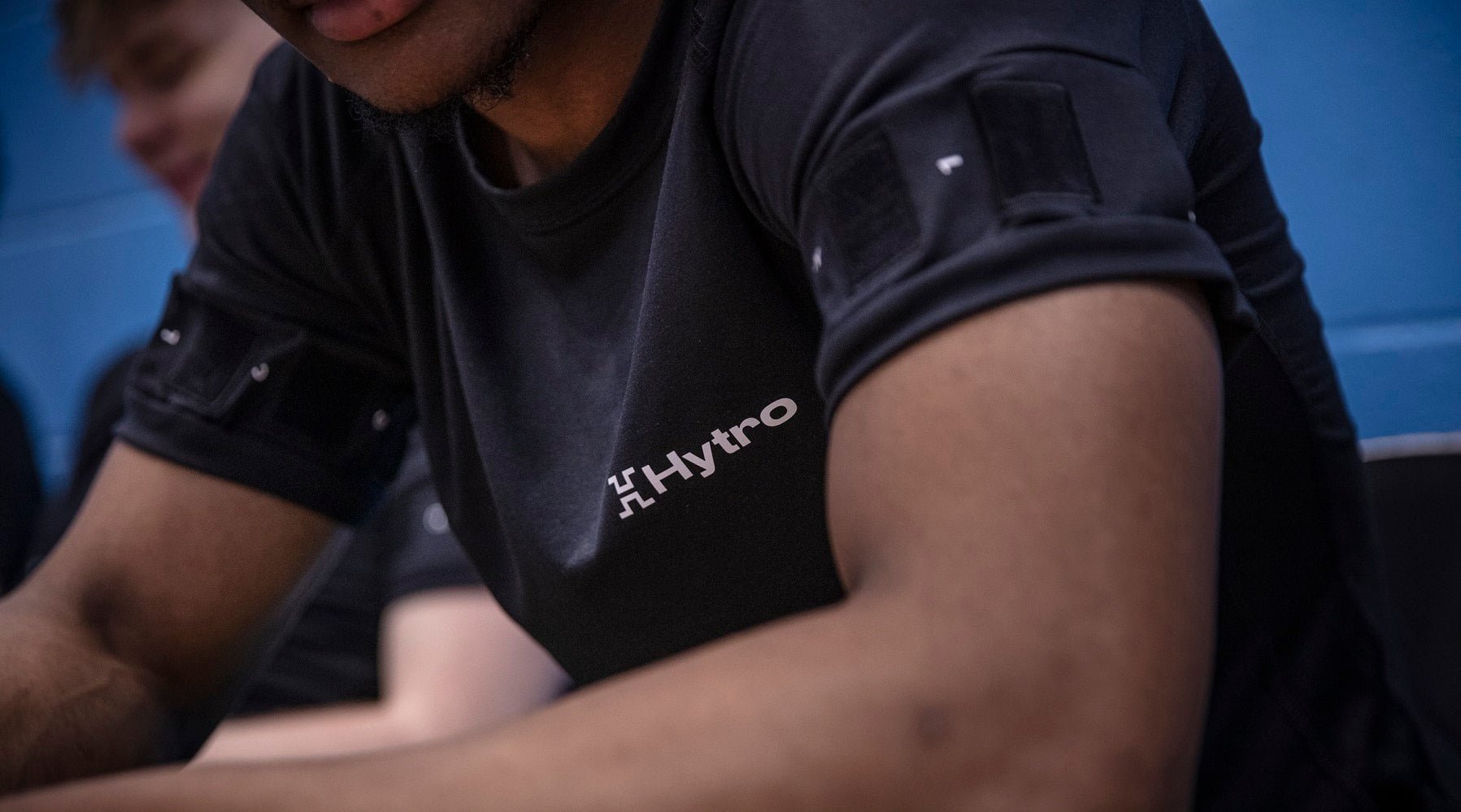
By integrating short bouts of BFR into preparation, athletes can achieve a heightened sense of readiness without the same mechanical cost. Dave Snyder notes that even five to ten minutes of mobility work with Hytro BFR wearables can leave athletes feeling prepared, and once they remove it, they “feel that warm rush” and are ready to train.
This shifts the purpose of the warm-up from building volume to creating readiness.
How do teams maintain strength during congested schedules?
Rethinking the post-game lift
Basketball teams often lift after games to maintain strength and power across congested schedules, but managing load within these sessions is critical.
Players still need exposure to strength stimulus, particularly across long seasons, but without creating additional soreness or compromising the next performance.
BFR is increasingly being used within this context as a way to maintain that balance.
By pairing low-load or isometric work with BFR, practitioners can preserve strength stimulus while reducing joint stress. This allows load to be consolidated more effectively across the week, rather than spread in a way that accumulates fatigue.

A tool that fits the environment
One of the reasons Hytro BFR has gained traction in basketball is its practicality.
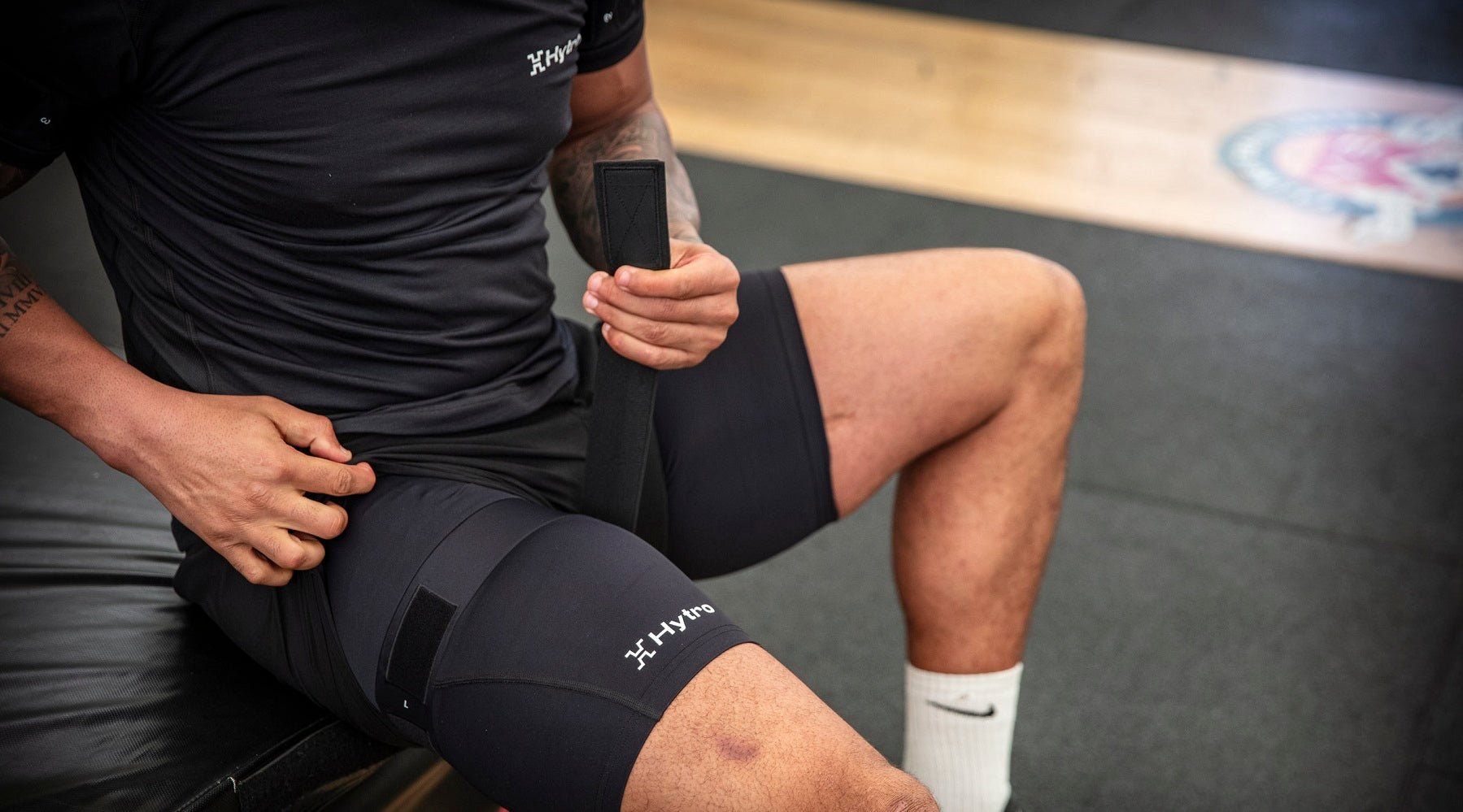
In environments with small staff numbers, constant travel and limited time, tools must integrate seamlessly into existing routines. Dave Snyder describes this clearly, noting that Hytro BFR “travels well, it’s practical and it fits into every facet of what we do.”
That versatility allows it to move across recovery, preparation and training without adding complexity. Rather than creating new processes, it enhances the ones already in place.
Where Hytro BFR fits
Hytro BFR is not used as a standalone intervention, but as part of the weekly rhythm. It supports post-game recovery, integrates into travel routines, and plays a role in both preparation and strength maintenance across congested schedules.
In practice, this means it may appear in multiple moments across the week, from recovery protocols immediately after games to short priming blocks before training, or low-load strength work when time and energy are limited. Each use is small in isolation, but together they allow practitioners to manage load more effectively and maintain readiness across the demands of the season.
Rather than adding more, it enables teams to do what they already do, more efficiently.
Preparing to perform
In basketball, readiness defines performance. The goal is not to do more, but to ensure that what is done leaves the athlete in a better position to perform. Across a long season, that comes down to managing load, maintaining physical qualities, and avoiding unnecessary fatigue.
BFR supports that balance. By reducing mechanical stress while preserving stimulus, and by fitting seamlessly into recovery and preparation routines, it allows players to arrive ready, without compromise.
From preparation to performance. See how Dr. Tyler Lescher and Dave Snyder are using BFR to keep players ready across the season. Or learn more about BFR for basketball.

Leave a comment
This site is protected by hCaptcha and the hCaptcha Privacy Policy and Terms of Service apply.