
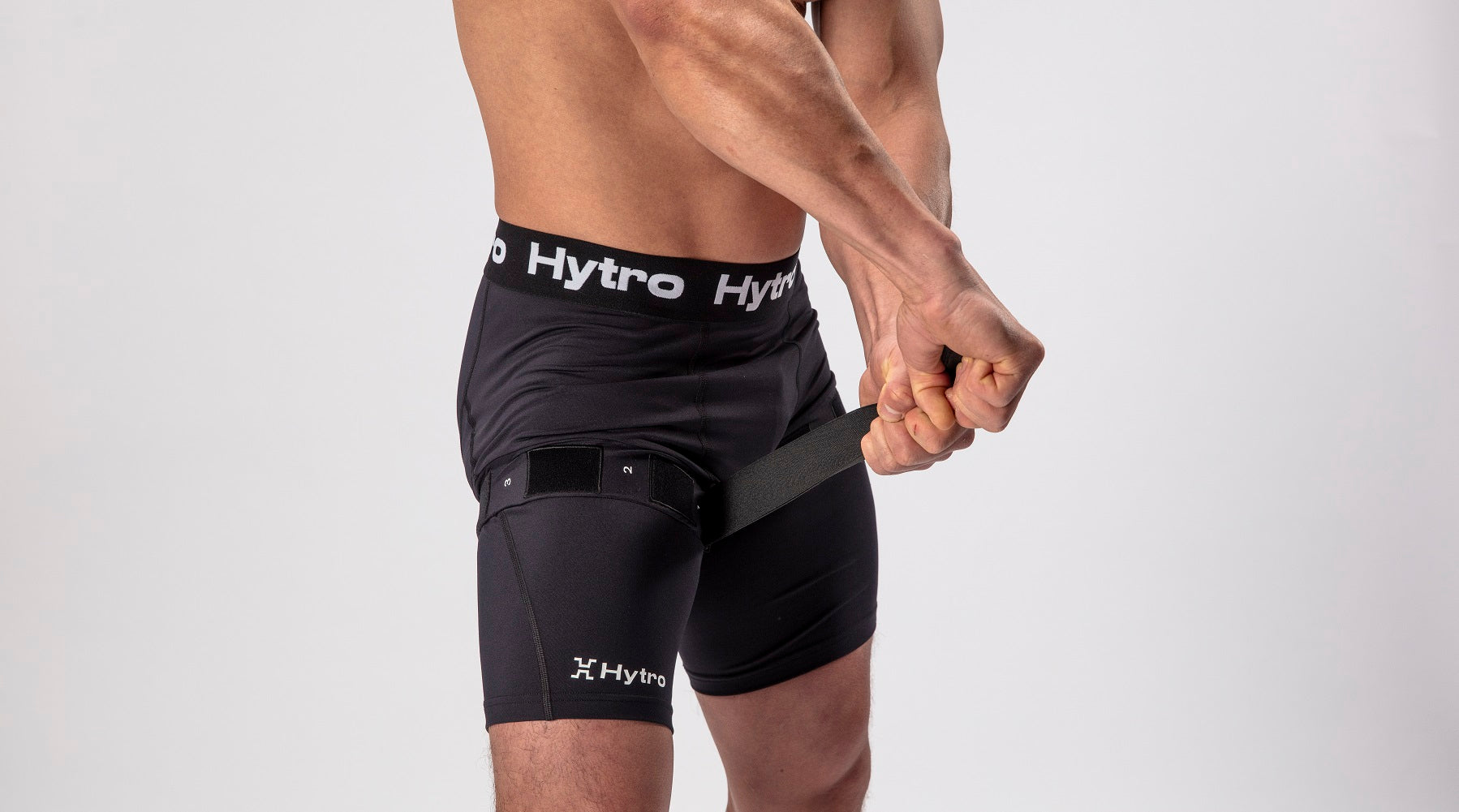
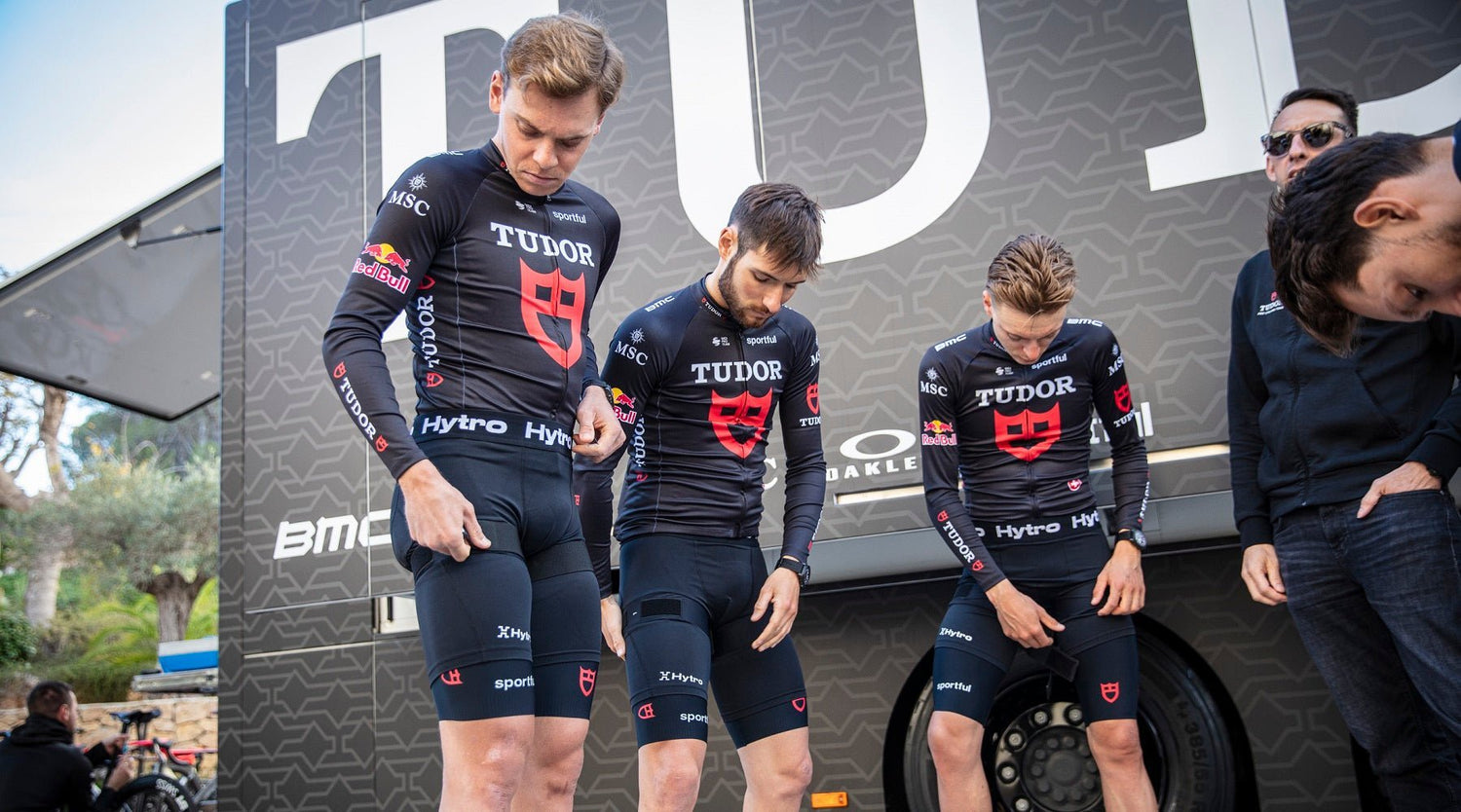
At Tudor Pro Cycling, performance is not built on adding more. It is built on making better use of what already exists.
Across a season that spans hundreds of race days, multiple continents, and constant travel, the challenge is not simply improving performance. It is sustaining it. Day after day, stage after stage, without increasing the overall burden on the athlete.
That balance sits at the centre of the work led by Dr. James Spragg, Head of Performance Support at Tudor Pro Cycling. In a recent conversation with Dr. Tom Brownlee, Chief Scientific Officer at Hytro they discussed how research, recovery and real-world constraints come together to shape performance across a demanding cycling season.
“We don’t want to just keep adding things,” Spragg explains. “Everything has to work within the environment. It has to improve performance without adding stress.”
Performance is a system, not a stack of interventions
In elite cycling, riders are already operating at the limit. Training load, travel, media, and competition create a constant background of stress that cannot simply be layered on top of. “One plus one is not always two,” Spragg says. “You can’t just keep adding demands to riders, especially in something like a Grand Tour.”
That reality shapes how Tudor evaluates any new intervention. Rather than relying solely on external research, the team validates everything internally. It has to work not just in theory, but within their specific environment, alongside existing protocols. “We always test it in-house first,” Spragg explains. “It needs to fit with everything else we’re doing.”
This is where Hytro BFR presented a clear opportunity.

Using controlled environments to create performance gains
Unlike many sports, cycling teams operate in constantly changing environments. Hotels, race schedules, and logistics are rarely consistent. One exception is the team bus. “That’s our controlled space,” Spragg says. “It’s where we can control the controllables.”
Riders can spend two to three hours on the bus post-stage, removed from racing demands and external pressures. For Tudor, this became a key window.
“How do we maximise that time?” he explains. “That’s where we saw the opportunity for BFR. Crucially, it offered a way to support recovery without adding additional load or time demands.
A recovery protocol that fits the reality of racing
Tudor implemented Hytro BFR as a passive recovery intervention within this controlled environment.
The protocol was simple: 3 to 5 minutes of restriction, with 2 minutes of release, repeated three times. All completed while riders were seated, eating, hydrating, or simply resting. “It’s something they can do with their feet up,” Spragg says. “It doesn’t add stress. It doesn’t take extra time.”
This matters. In elite environments, even small additional demands can have a negative impact if they disrupt established routines. Instead, Hytro BFR integrates into what riders are already doing. “They can use it while having their recovery shake or post-race meal,” he explains.
What the research showed
To evaluate its effectiveness, Tudor conducted an in-house study during a training camp.
Two matched groups of riders were used:
- One with effective occlusion pressure
- One with a non-effective, sham condition
The goal was not just to observe performance outcomes, but to understand how BFR influenced recovery within a real training environment. The clearest findings came from subjective measures.
“On day three, we saw a big difference,” Spragg says. “The effective group felt less fatigued and less overreached.” While statistical significance was not reached in on-bike performance measures, the trend was still meaningful. Importantly, no rider performed worse using Hytro BFR. “That’s the first bar,” he explains. “There’s potential upside, and no downside.” For practitioners, that balance is critical.

Why feeling better matters in elite sport
In environments where performance margins are extremely small, subjective experience carries real weight. “It shouldn’t be underestimated how important it is for riders to feel recovered,” Spragg says.
Across a three-week Grand Tour, accumulated fatigue is unavoidable. The difference is how well riders can manage it. “If they can feel a little bit better, a little bit more recovered, that matters.”
This is not separate from performance. It is part of it. “Riders care about two things,” he says. “Feeling better on the bike and going faster.”
Supporting functional overreaching, not breakdown
One of the key areas Tudor explored was how BFR influenced fatigue management. Using a physiological test designed to differentiate between functional and non-functional overreaching, the team assessed how riders responded under load.
The findings suggested that riders using effective BFR were able to maintain better physiological responsiveness under fatigue. “They didn’t have to push as hard to reach the same heart rate,” Spragg explains.
In practical terms, this indicates that athletes were staying closer to a functional training state, rather than drifting into excessive fatigue. “If riders stay fresher for longer, they recover quicker and can perform better later." Over the course of a stage race, that becomes significant.
Beyond recovery: preparing for performance
While Tudor’s primary use of Hytro BFR has been in recovery, the physiological mechanisms also open up opportunities before performance.
Pre-effort application can enhance oxygen delivery and utilisation, supporting readiness before sustained efforts without disrupting structured warm-ups. In a sport where routines are tightly controlled, this matters. It allows teams to prepare athletes more effectively without adding complexity or time.

Small gains, meaningful outcomes
Cycling is defined by marginal gains. “The difference between winning and losing can be a tyre width,” Spragg says. In that context, even small improvements in recovery, readiness, or perceived effort can influence outcomes.
What matters is not just whether an intervention works, but whether it fits. For Tudor, Hytro BFR has demonstrated both. It integrates into existing systems. It supports recovery without additional load. And it provides measurable improvements in how athletes feel during demanding training blocks.
In elite sport, that combination is what turns theory into performance.
Explore how another World Tour team is applying similar thinking in practice. Read how Soudal Quick-Step are exploring Blood Flow Restriction to support recovery across the demands of elite cycling or learn more about BFR for cycling.


Leave a comment
This site is protected by hCaptcha and the hCaptcha Privacy Policy and Terms of Service apply.