
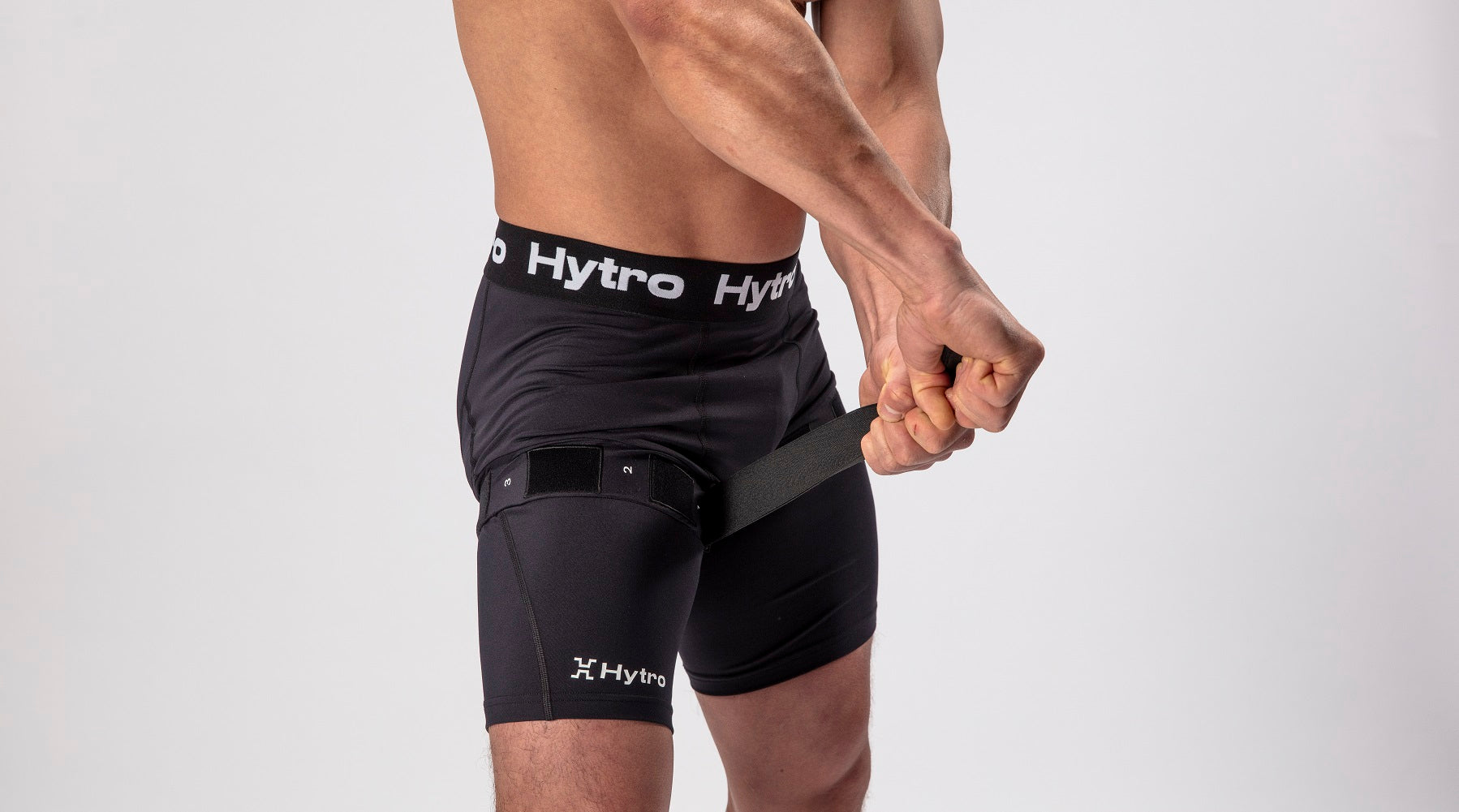

The real test was never a certificate. It's whether you can work from the evidence, and keep it current.
BFR sits inside the existing scope of practice for most of the practitioners already using it: physiotherapists, athletic trainers, and strength and conditioning coaches. No one is going to stop you strapping in tomorrow, and there's no formal barrier between you and your first session.
So in the narrowest sense, you don't need a certificate to use BFR. But that's the least useful version of the question. The one that actually matters in a performance environment is different: can you work from the evidence, keep that knowledge current, and translate it into decisions that hold up with real athletes in your setting?
Evidence-based practice cuts both ways
Good practice with BFR, like any method, rests on two things that pull in the same direction. The first is evidence-based practice: working from the best available research rather than habit, hearsay or what a rep told you. The second, easier to overlook, is practice-based evidence: the understanding that comes from applying the method in the real world and paying close attention to what actually happens.
BFR needs both. The research tells you what's mechanistically possible and where the guardrails sit. Applied use in a performance setting tells you what works once the variables stop being controlled: fatigue, fixture congestion, an athlete who responds nothing like the study population. A coach who can only recite the literature, or who works purely on feel, is operating with one hand tied. Competence is the ability to hold both at once, and to translate current research into decisions that fit the athlete and the environment in front of you.
And "current" is doing real work in that sentence. The evidence base around BFR has moved quickly, and it's still moving. Leaning on a course you took five years ago, or a protocol picked up secondhand, isn't evidence-based practice; it's a snapshot going stale. This is why this is better understood as ongoing professional development than a one-off certificate. Staying competent means staying current.

Your athletes can tell the difference
Here's what a certificate on the wall can't do. BFR only does anything if athletes actually use it, properly and consistently enough to matter. And that depends far less on the equipment than on the coach standing next to it. A wearable makes BFR simple and safe to apply; what it can't do is explain to an athlete why they're doing it, put the research into terms that land, build it into their week in a way they'll stick to, and field the sceptical questions that come the first time it feels strange. That part is coaching, and it runs on genuine understanding.
Athletes are a discerning audience. They buy into methods their coach visibly understands, and quietly tune out the ones their coach seems unsure about. If you can't explain how BFR works, why it's worth their time, and what good use actually looks like, you don't get adoption. You get polite compliance that fades as soon as the novelty does. The coach who knows it inside out gets genuine buy-in; the one who's improvising gets kit that's tried once and left in a bag.
That's where real command of the method earns its place. In a performance environment, "why are we doing this?" is a fair question, and "the brand says it works" isn't an answer. Being able to point to the evidence, and to back it up when the questions come, is how you go from someone introducing a gadget to someone athletes trust to shape how they train and recover.
Trust and respect are the real currency here, and they aren't conferred by a job title. They're earned by visibly knowing what you're asking athletes to do and why, and structured professional development is one of the clearest ways to build that command and to show it.
The catch: most BFR education wasn't built for performance
Here's the complication. If you go looking for BFR education today, most of what you'll find was built for the clinic, not the pitch.
The established providers are overwhelmingly rehabilitation-focused. Many are gated behind clinical licences; you have to be a physiotherapist, athletic trainer, chiropractor or physician to enrol at all. The content is oriented around post-operative recovery, patient populations and clinical protocols. That's valuable work, and for a rehab clinician it's exactly right.
But if you're a strength and conditioning coach or a performance practitioner, it leaves a real gap. You can come away understanding the physiology and the rehab applications and still have no clear framework for how BFR fits into preparation, into a training block, into a recovery strategy across a congested fixture schedule, under real pressure, with real athletes, inside a performance system. The theory gets covered. The application, in your world, often doesn't.
That gap is why the same method, used by two different teams, can produce very different results. With no shared framework for how and when BFR should be applied in performance, application drifts, and inconsistency is the enemy of anything you want to be able to trust.

What performance-first education actually looks like
This is the gap Hytro Education was built to close. Rather than adapting a clinical curriculum for sport, it starts from how BFR is already being used in elite performance environments and formalises it into something repeatable.
The structure follows the way a practitioner actually needs to think about it. It moves from the science (the physiology, mechanisms and research behind why BFR works) through to safe and effective application, covering screening, contraindications, pressure validation and equipment selection. From there it builds into Performance BFR proper: preparation, to improve readiness before training and competition; training, with programming strategies for strength, hypertrophy and endurance; and recovery, with protocols aimed at restoration and athlete availability. It ends where practice actually happens: building BFR into a system you can run day to day, supported by real case studies rather than isolated protocols.
It's practitioner-led rather than lecture-led, and the course is now approved to provide 0.7 NSCA CEUs and 8 BOC Category A CEUs. But the value doesn't hinge on the credit. The value is a shared, structured standard, and a way to keep current, for a method that has grown faster than the education around it.
So, do you need a certificate?
Not to be allowed to use BFR. But that was never the useful question. The useful one is whether you can work from the evidence, keep that knowledge current, and translate it into decisions that hold up in your setting, with real athletes, under real pressure.
That isn't something a one-off qualification settles. It's the ongoing work of professional development: staying close to the research, testing it against what you see in practice, and building the kind of understanding your athletes can feel. The practitioners who get taken seriously are the ones doing that work, who can explain and coach BFR well enough to earn genuine buy-in, not just compliance.
So the honest question isn't whether you need a certificate. It's whether your knowledge is current, evidence-led and fit for the environment you actually work in. For anyone applying BFR in performance, that's a gap worth closing, and worth keeping closed.
You don't need a certificate to use BFR. But you do need to know it well enough to use it well, and to bring your athletes with you. Hytro Education is the programme built for performance rather than the clinic: structured, practitioner-led, and designed to keep you current, from the evidence through to confident application in a real performance environment. If you want a BFR practice that stands up to scrutiny, start there.

Leave a comment
This site is protected by hCaptcha and the hCaptcha Privacy Policy and Terms of Service apply.