
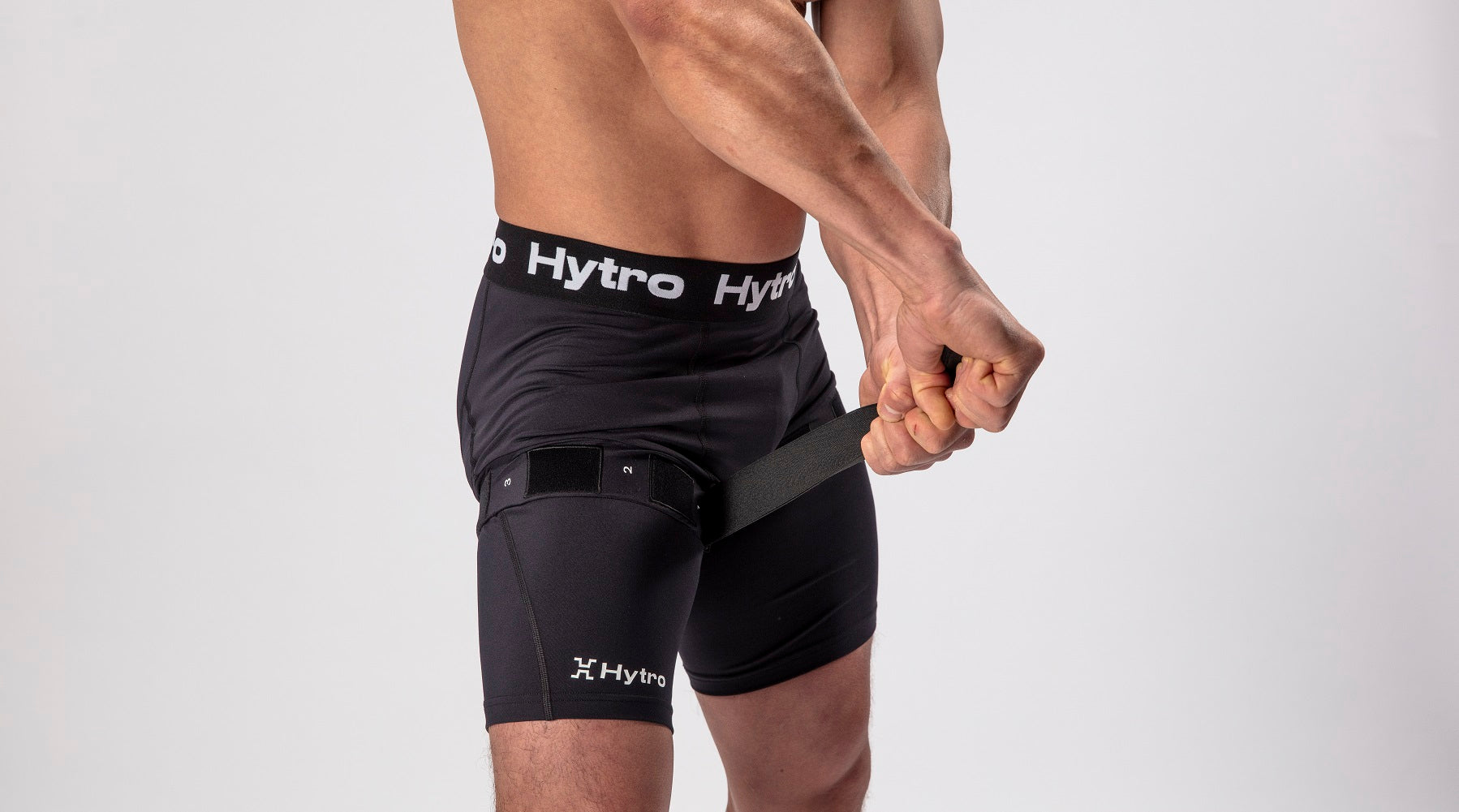
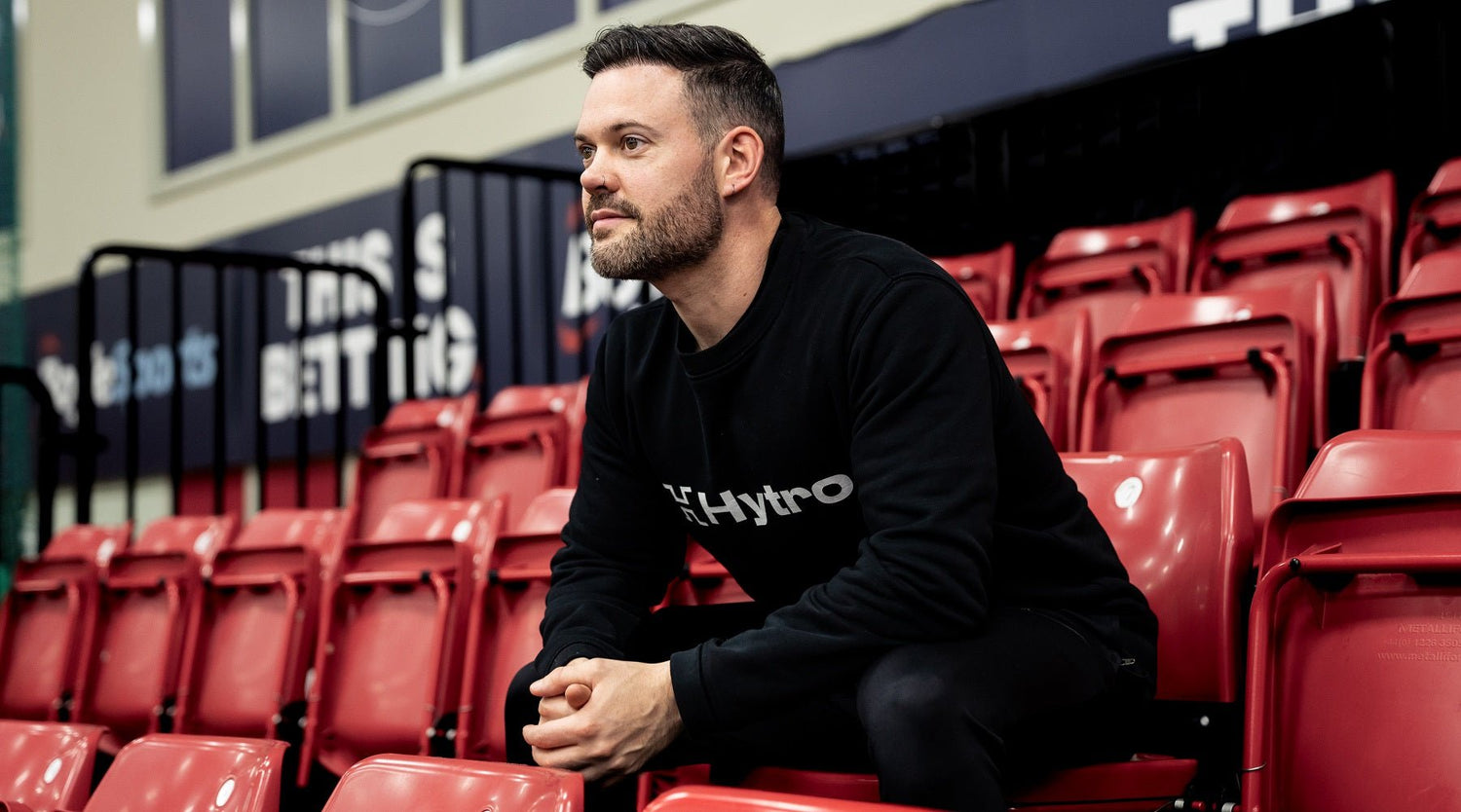
If wearable BFR was going to earn its place, it had to earn it where standards are highest. Elite environments demand proof, expect evidence and challenge assumptions.
For Raj and Warren, professional sport was always central to their vision. It was where Warren’s understanding of Blood Flow Restriction had been formed, where the limitations of existing equipment had become clear, and where scrutiny was part of daily life.
At the same time, the direct-to-consumer opportunity was clear. The hypertrophic benefits of BFR were well-documented, and in strength-focused communities, muscle growth was a compelling hook, meaning early conversations and testing confirmed interest.
Both routes were explored deliberately.
Education became the real challenge
What became apparent very early, however, was not a question of demand, but a question of education. Wearable BFR was not a simple fitness product. It required understanding, context and clarity around safety, mechanism, and purpose.
In professional sport, practitioners already understood BFR as a rehabilitation tool. They were familiar with the physiology. They knew its benefits. But wearable BFR, untethered from clinical machines and designed for broader application, raised legitimate questions. Could it deliver the same stimulus? How would it be applied safely in an unsupervised setting? Where did it sit within a structured performance week? These questions were not barriers. They were necessary.
They forced the product to be examined properly and demanded evidence. They required education not just around what BFR was, but how wearable BFR could extend beyond rehabilitation into preparation, training, and recovery.

In direct-to-consumer settings, the education gap was even wider. Many consumers were unfamiliar with BFR entirely. Explaining the science, the mechanism, and the safe application of a performance tool traditionally associated with clinical or elite environments required significant groundwork. Without that foundation, there was a risk the product could be reduced to a muscle-building accessory rather than understood as a performance technology.
It became clear that education would sit at the centre of Hytro’s journey in both environments. The difference was where that education could begin with the strongest foundation.

Why elite sport was the right place to start
Professional sport offered a knowledgeable audience. Coaches and practitioners could interrogate the concept from a position of experience. They could challenge it intelligently, apply it critically, and they could test it in environments where feedback was immediate and standards were high.
This made elite sport the right place to build from.
Elite sport is known for discipline, constructive critique, and pushing boundaries. It is a natural environment for innovation, where theory meets constraint and ideas are exposed to pressure. By deliberately placing Hytro in that setting, the team chose one of the harshest environments for check and challenge.

Building under scrutiny
The intention was clear: learn quickly, refine rigorously, and build something that could withstand scrutiny. “We knew it would be questioned,” says Warren. “That was the point. If wearable BFR was going to earn its place, it had to do so under pressure.”
Focusing on professional sport was a sequencing decision. The team recognised that credibility, once earned in elite sport, would shape how the product was understood everywhere else. Education would be stronger, application would be clearer, and trust would be grounded in real-world use.
From a leadership perspective, the decision reflected discipline. “There was interest on both sides,” says Raj. “But the order mattered. We had to start where scrutiny was highest, and trust had to be earned properly. Scaling before that would have been premature.”
Practitioners as collaborators
By working closely with practitioners from Warren’s academic and professional network, Hytro placed the product into environments built on standards. Early adopters became collaborators and critics. They asked difficult questions, tested protocols and challenged assumptions. Their feedback shaped both the product and the education framework around it.
This was not a marketing exercise. It was product development under pressure.
Through that process, product–market fit became clearer, the role of wearable BFR within a performance programme became more defined, and the education required to support safe and effective application became better understood.

Early adoption in practice
Progress in elite sport is rarely immediate. Relationships take time, and adoption is incremental. That reality was understood from the beginning. Early adoption from practitioners like John Noonan came through trust in the people behind the product and curiosity about how wearable BFR could fit within real performance environments.
John had already worked with traditional pneumatic BFR systems in clinical and rehabilitation settings, so his interest was balanced with caution.
“My first reaction was curiosity but also caution. I already understood the opportunity that comes with blood flow restriction, but also the responsibility that comes with using it properly.”
For practitioners like John, the central question was not whether BFR worked. That had already been established. The question was whether a wearable format could retain the value of the intervention while making it usable inside a team performance environment.

“The strength of traditional pneumatic systems was the ability to be highly targeted around limb occlusion pressure and tightly manage the intervention. But the limitation was equally obvious. It was invasive, highly supervised, and operationally difficult to scale.”
In environments where large squads move through training sessions every day, that operational reality matters.
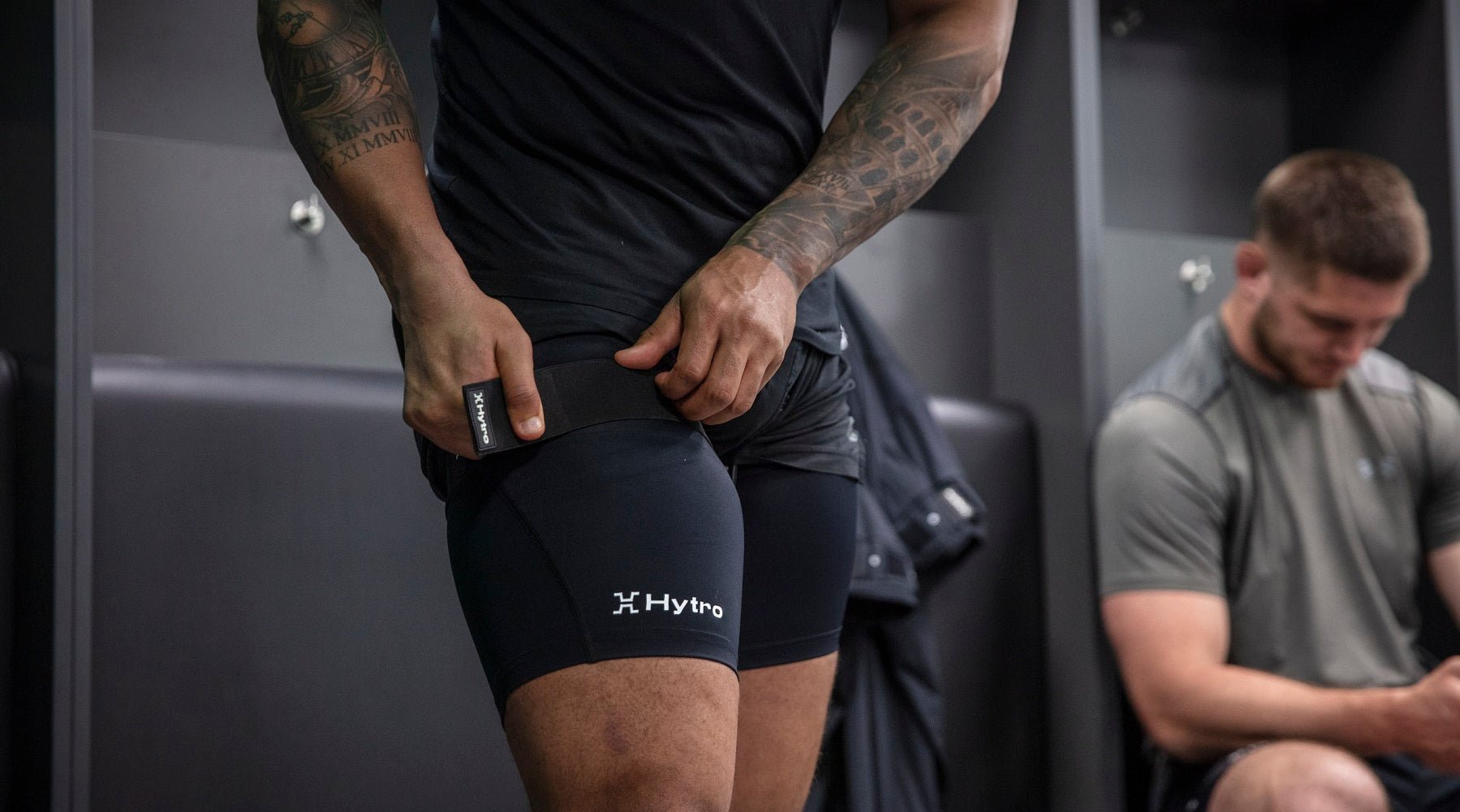
“In team sport settings, where you may have 15 to 30 athletes moving through the gym at once, any tool that requires one-to-one set-up and close monitoring is going to struggle to gain traction.”
Those early conversations and practical trials helped clarify the role wearable BFR could play. Rather than replacing clinical systems, it opened a different use case: making the principles of BFR easier to integrate into everyday training and recovery behaviours across an entire squad.
Practitioners like John helped pressure-test the concept in real environments, providing the type of feedback that shaped both the product and the education framework around it.

By choosing to build first in an environment that demanded evidence, Hytro protected the science, respected the intelligence of coaches, and established foundations that continue to shape the company today.
The long-term ambition has always extended beyond elite sport. But the path required foundations that could withstand scrutiny.
Professional sport was the proving ground, and that focus on standards, education, and earned trust remains central to how Hytro builds today.
To understand how it all started, and the thinking that shaped Hytro from day one, read the full story.


Leave a comment
This site is protected by hCaptcha and the hCaptcha Privacy Policy and Terms of Service apply.