
Rugby union is built on fine margins. The teams that win aren’t always the biggest or fastest, but the ones who can stay ready longest through travel weeks, back-to-back tests, and the inevitable knocks that accumulate across a congested calendar. Availability has become one of the strongest predictors of success.
As performance staff continue searching for ways to keep players primed, Performance Blood Flow Restriction (BFR) has emerged as one of the most effective tools for managing fatigue and maintaining readiness. Used well, it supports warm-ups, accelerates recovery, and offers players a portable solution for managing readiness on the move.
What began as a science-first concept is now a practical performance tool embedded across elite rugby environments. And as unions and clubs generate their own data, the evidence for BFR’s role in improving availability is only getting stronger.
Availability is everything in modern rugby
Between short turnarounds, travel demands, and the physical toll of repeated collisions, maintaining a squad that can train, prepare, and perform has become as important as technical execution.
Coaches speak often about the “second squad” – the depth players who must be ready to step up at a moment’s notice. Smart recovery is what keeps them close to match intensity, even when training loads fluctuate.
This is where Performance BFR is becoming indispensable. It gives players a low-fatigue way to maintain qualities, reduces soreness and fatigue that limit training readiness, and helps them rebound faster between sessions and matches.

Using BFR to enhance recovery and keep players available
Wales Rugby Union Women completed a pilot study during the Six Nations to assess the impact of Passive Recovery BFR when used between games.
Initial results were promising, with players reporting improvements in recovery markers across congested competition windows using a modified Likert Scale (a 1-5 scoring system for Muscle Soreness, Pain, and Perceived Recovery)
Earlier research carried out with Bristol Bears explored the efficacy of Passive Recovery BFR in elite male players following 10 competitive match fixtures. .
The findings showed significant improvements in players’ perception of fatigue, muscle soreness and joint pain immediately after performing Passive Recovery BFR when compared to their control data. Importantly, those improvements were still evident when testing was performed ~40 hours later on Match Day +2.
In a high-performance environment, meaningful shifts in perceptual recovery across MD and MD+2 are not trivial. They represent players returning to training in a better state, reducing cumulative fatigue, and increasing availability across the week.
Hytro BFR was shown to meaningfully improve perceptual recovery markers in elite rugby union athletes following competition.
These applied investigations reflect the real-world challenges of international rugby: short turnarounds, travel fatigue, and repeated high-intensity collisions.

BFR as a preparation tool: priming readiness before the whistle
Gloucester Rugby conducted a study to investigate the effects of adding BFR to the warm-up as a preconditioning stimulus. Their study found that Preparation BFR:
• Improved sprint performance
• Delayed fatigue
• Did not increase perceived effort
This matters on match days, but also during training weeks where load must be tightly controlled. For players returning from minor injuries, depth players looking to show sharpness, or squads managing heavy fixture blocks, BFR provides a way to elevate readiness without additional physical stress.
Warm-ups become not just a routine, but a performance lever.

Smarter recovery in practice: lessons from Scotland Rugby
Scotland Women have shown how Recovery BFR can support resilience throughout high-pressure windows, particularly in the demanding periods that surround international rugby.
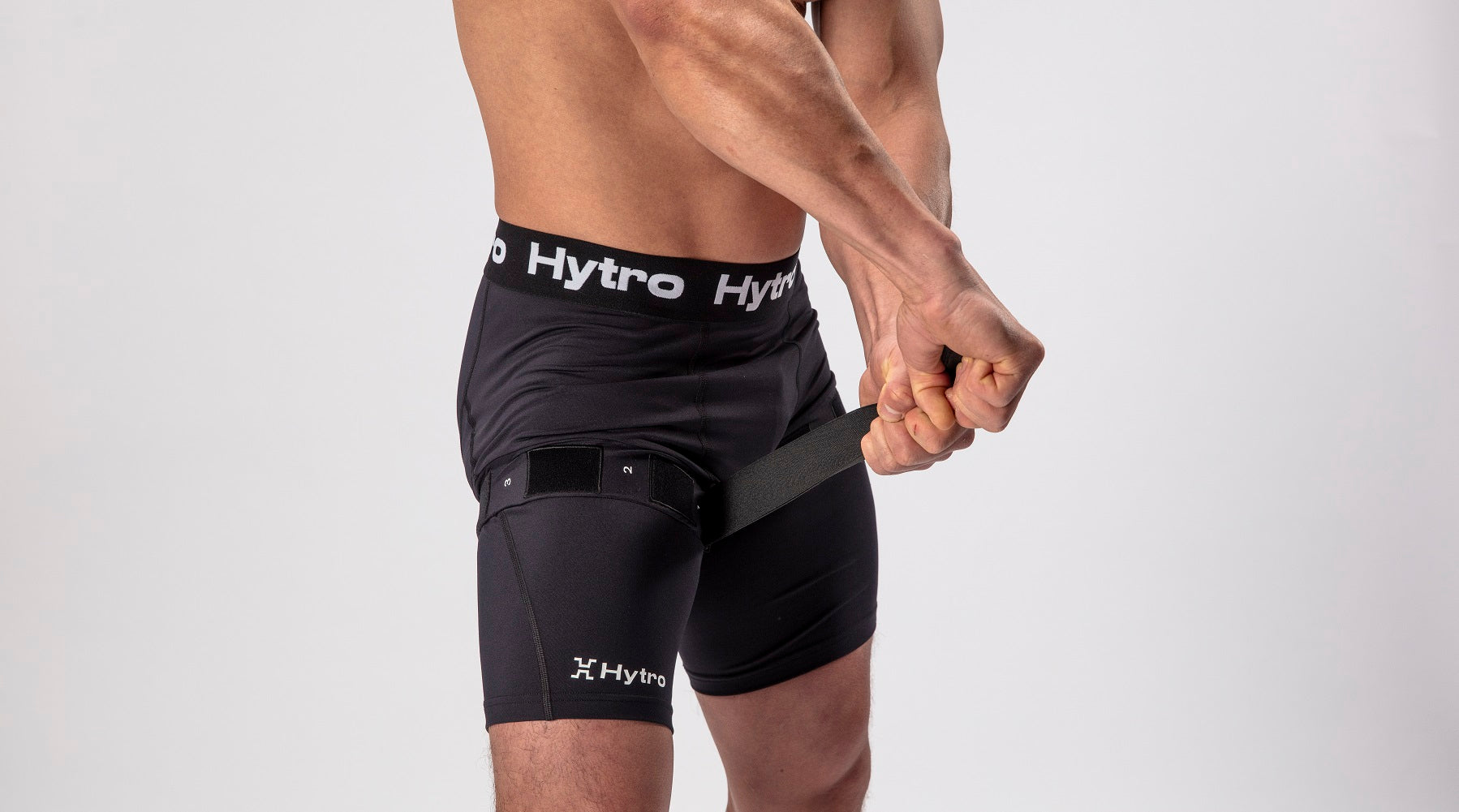
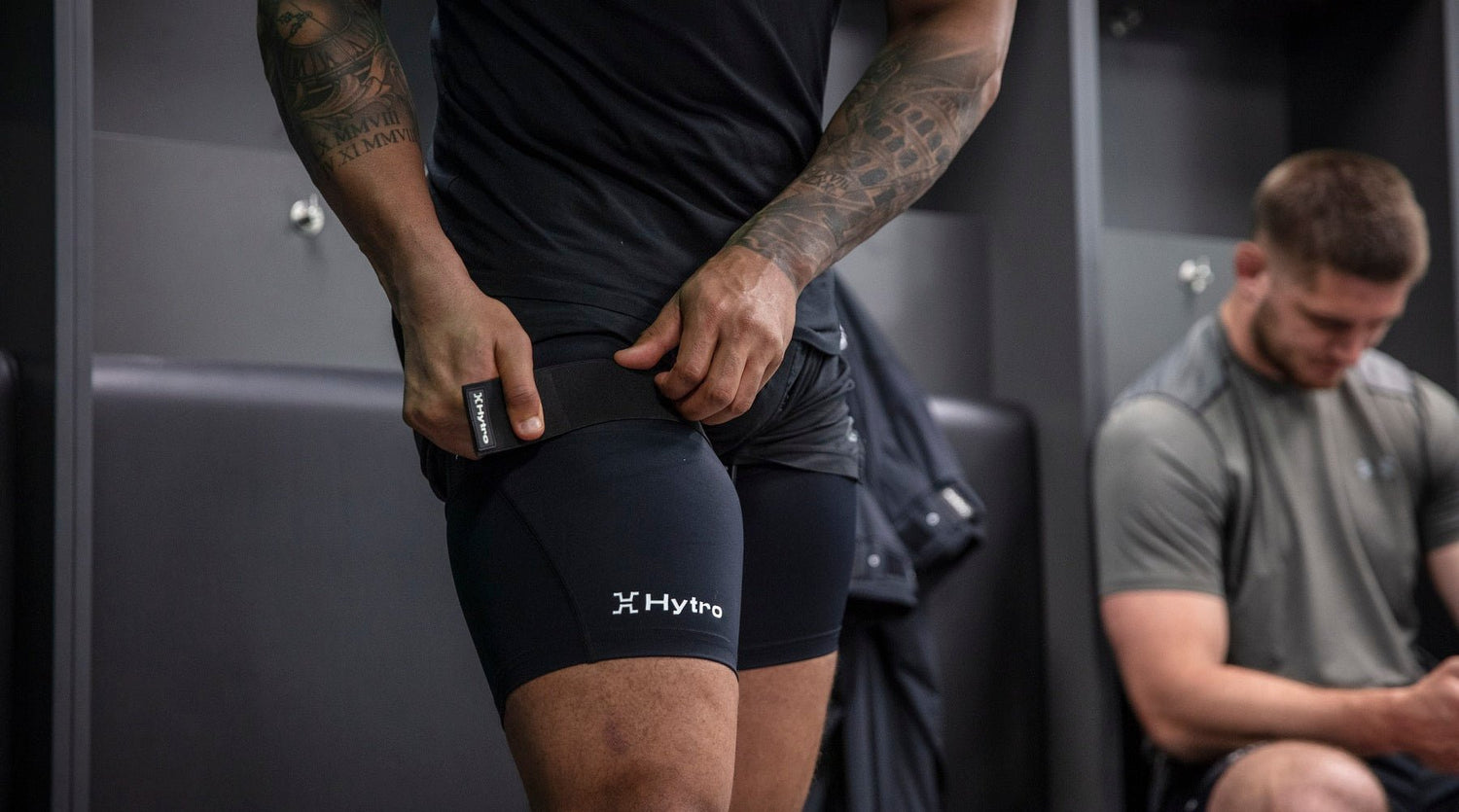
During their recent campaign, the performance team relied on BFR to keep players fresh through rapid turnarounds, intense travel schedules, and emotionally charged match environments. The portability of the tool meant players could complete effective recovery wherever they were - on the bus, in hotels, or immediately after training.
The coaching group also noted that the ability to individualise recovery was key. Some players used BFR strategically around heavy sessions, while others incorporated it more routinely across the day. It became part of daily mobility flows and stretching, with players often moving through hotel hallways together in BFR shorts as they worked through recovery routines between training blocks. It also extended into quieter moments of the day, with players arriving at meals wearing the shorts and running bouts of pressure and release to help flood the tissues with fresh blood flow. Despite the different approaches, the outcome was consistent: reduced soreness, improved circulation, and a quicker return to readiness. For a squad balancing development, performance, and squad rotation, BFR became a simple but effective thread supporting availability across the entire tournament.
This mirrors trends across the professional game: teams using BFR not just as a recovery modality, but as a resilience-building strategy tailored to congested calendars.

A practical framework for BFR in rugby environments
Recovery BFR
Recovery BFR is used within two hours of a match or after heavy training to reduce soreness, joint pain, and fatigue while supporting circulation and muscular repair. This makes it particularly valuable during travel windows, short turnarounds, and the high-collision phases of the season where players most need to rebound quickly.
Preparation BFR
Preparation BFR is integrated into warm-ups to enhance readiness and muscle activation, providing a pre-conditioning effect that improves explosive output. It supports match-day performance, sharpness during speed sessions, and any scenario where availability must be protected without adding extra load.
Low-fatigue BFR Training
Low-fatigue BFR Training is used when players cannot tolerate additional mechanical stress but still require a meaningful stimulus. It helps injured players maintain qualities during rehab, enables management groups to train effectively while protecting load, and keeps depth players sharp during heavy fixture periods.

Science and sport working together
The evolution of BFR in rugby highlights how performance science is becoming more practical and more portable. It is no longer theory or lab-based innovation; it is a tool that fits into the lived reality of elite sport.
Congested calendars, travel fatigue, recovery between tests, and the need for ready, available depth. These are the problems modern teams must solve. BFR is proving to be an effective way of addressing them.
In a sport where availability often decides seasons, the ability to recover smarter and prepare more effectively is how coaches ensure their players are built to outperform.
Discover the recovery and priming protocols elite teams are using. Connect with our team to get started.



Leave a comment
This site is protected by hCaptcha and the hCaptcha Privacy Policy and Terms of Service apply.