
At the highest level of collegiate volleyball, performance is rarely defined by a single moment.
It is built across weeks of training, tested across long stretches of competition, and ultimately exposed in the moments when fatigue sets in and margins tighten. The athletes who stand out are not always the ones who can produce the biggest output once, but those who can return to it again and again, even when the season begins to take its toll.
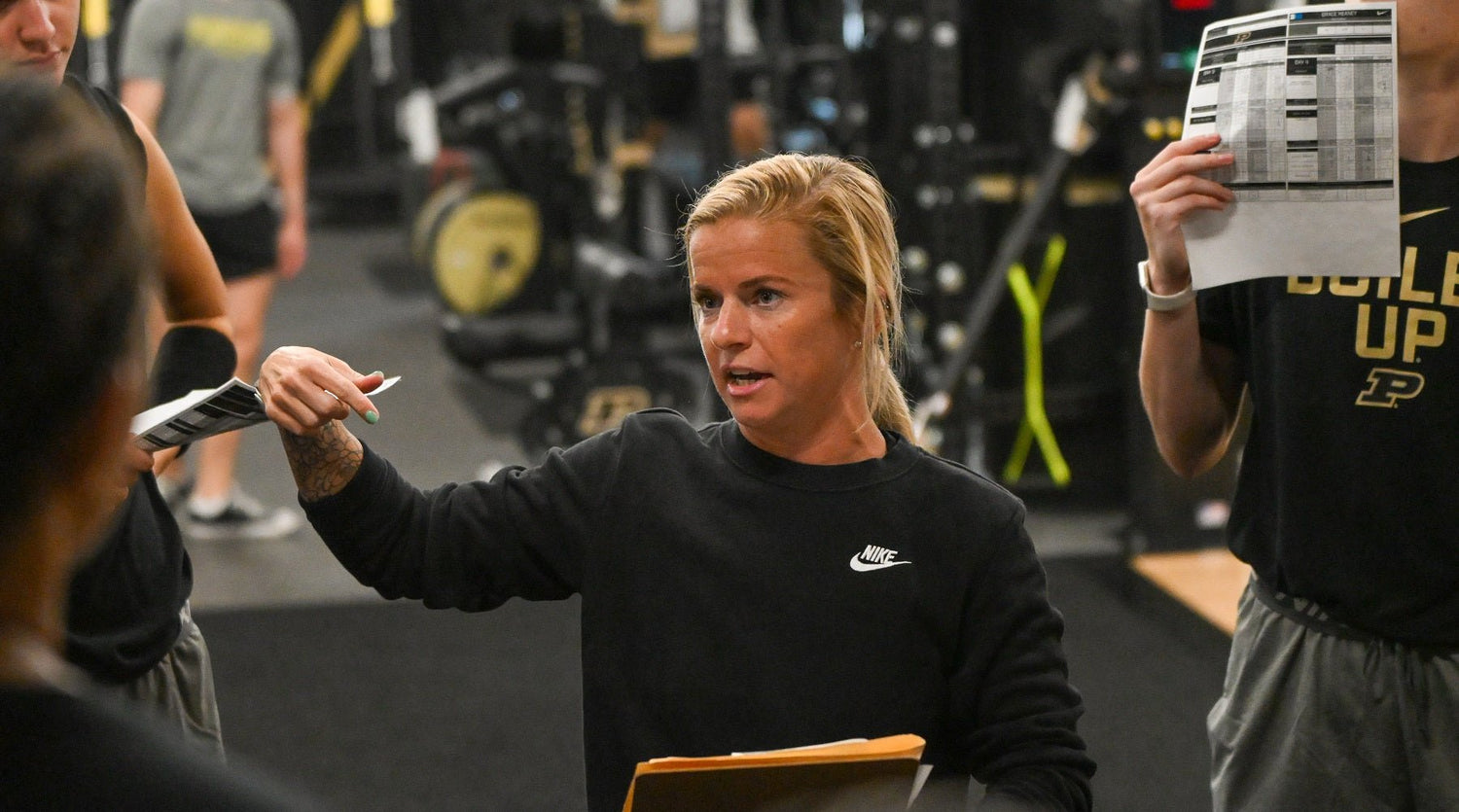
That reality sits at the centre of how Kelly Borges approaches her work at Purdue.
As Associate Director of Strength and Conditioning, Kelly Borges operates in an environment where baseline athleticism is already high. Her athletes are powerful, fast and well-coached. The question is no longer how to build those qualities from scratch, but how to sustain them across a demanding Big Ten season that stretches athletes physically and mentally.
That perspective is explored in this episode of the Hytro Performance Podcast, where Kelly Borges joins Chase Lattimer and Tom Brownlee to discuss performance, recovery and the realities of collegiate volleyball.
Early in the conversation, she frames it simply. “It’s not always the best team that wins. It’s the healthiest team at the end of the season.”
It is a shift in perspective that changes everything. In volleyball, jump height remains important, and explosiveness remains a defining quality. But those attributes only carry value if they are still there in the fourth set, after multiple matches, after travel, after the accumulation of hundreds of jumps that rarely show up in highlight reels.
The challenge is not just producing force but maintaining it.
The hidden demands of volleyball
Volleyball is often described as an explosive sport, and that is true in isolation. Short rallies, high-intensity movements, and repeated maximal jumps define the surface of the game, but beneath that sits a more complex picture.
Alongside those peak efforts is a constant accumulation of lower-intensity jumps, rapid transitions, and repeated landings that place sustained stress on tendons and joints. Over time, that load builds quietly, showing up most often in the knees, ankles and shoulders. Kelly points to patellar tendon issues in particular as a consistent challenge, especially for athletes operating at the net, where repeated impacts are unavoidable.
This is where the conversation moves beyond physical preparation in the traditional sense. It is not enough to develop strength and power in the off-season. The real test comes in preserving those qualities when the schedule becomes congested and recovery windows narrow.
In that context, repeatability becomes the defining metric. “We’ve maximised our strength, but can we now do that through the gruelling schedule… and still play at our best?”
Simplifying what matters
Despite the complexity of the environment, Kelly’s approach is grounded in clarity. Rather than chasing an ever-expanding list of performance metrics, she narrows her focus to a small number of key qualities that directly influence how her athletes move and perform.
Reactive strength, propulsive force and braking force form the foundation of her assessment. It is a system that allows her to identify where an athlete is limited, while also aligning closely with what the coaching staff sees on the court. “I’ve really honed it down to three buckets… and it’s proven fruitful.”
That alignment is critical. It ensures that performance work is not happening in isolation but directly supports the demands of the sport. It also allows for more meaningful conversations between staff, where physical qualities and technical execution are part of the same picture, rather than separate discussions.

When progress stalls
Like many performance environments, the introduction of Blood Flow Restriction did not come from a desire to add something new. It came from a need to solve a problem.
In this case, it was an athlete returning from shoulder surgery who had reached a plateau. Progress had slowed, and traditional methods were no longer driving the same adaptation. Kelly had seen enough from conversations and observations elsewhere to believe that BFR could offer something different.
“I think this would be the tipping point… to break us through the plateau.”
What followed was not just an incremental improvement, but a shift in trajectory. The athlete began to add lean muscle mass, regain strength, and move more confidently through her rehabilitation. Just as importantly, she bought into the process quickly, understanding both the rationale and the potential upside.
That individual success created the foundation for something wider.
From rehab to performance
Initially, BFR sat in a familiar space. Like many practitioners, Kelly had seen it primarily as a rehabilitation tool, used in controlled environments with limited exposure.
What changed was how it translated beyond that setting.
The breakthrough moment came not in the weight room, but on the court. “The first swing that I took… I’ve never felt more warm.”
Using BFR as part of a warm-up created an immediate and noticeable difference. The athlete described feeling as though she had already completed an extended throwing progression, despite only spending a short period in the shirt.
It was a simple observation, but an important one. It reframed BFR from something that supports recovery to something that can actively enhance preparation.
From that point, adoption accelerated, with both the coaches seeing the benefit and the athletes feeling the difference. What began as a targeted intervention quickly became part of the wider system.

Integrating without adding
One of the most consistent challenges in collegiate sport is time. Athletes are balancing academic commitments, training, travel and competition, often with little room to add anything extra.
Rather than creating new sessions, Kelly focused on integration. “I didn’t have to reinvent the wheel… it was just added into the structure that’s already in place.”
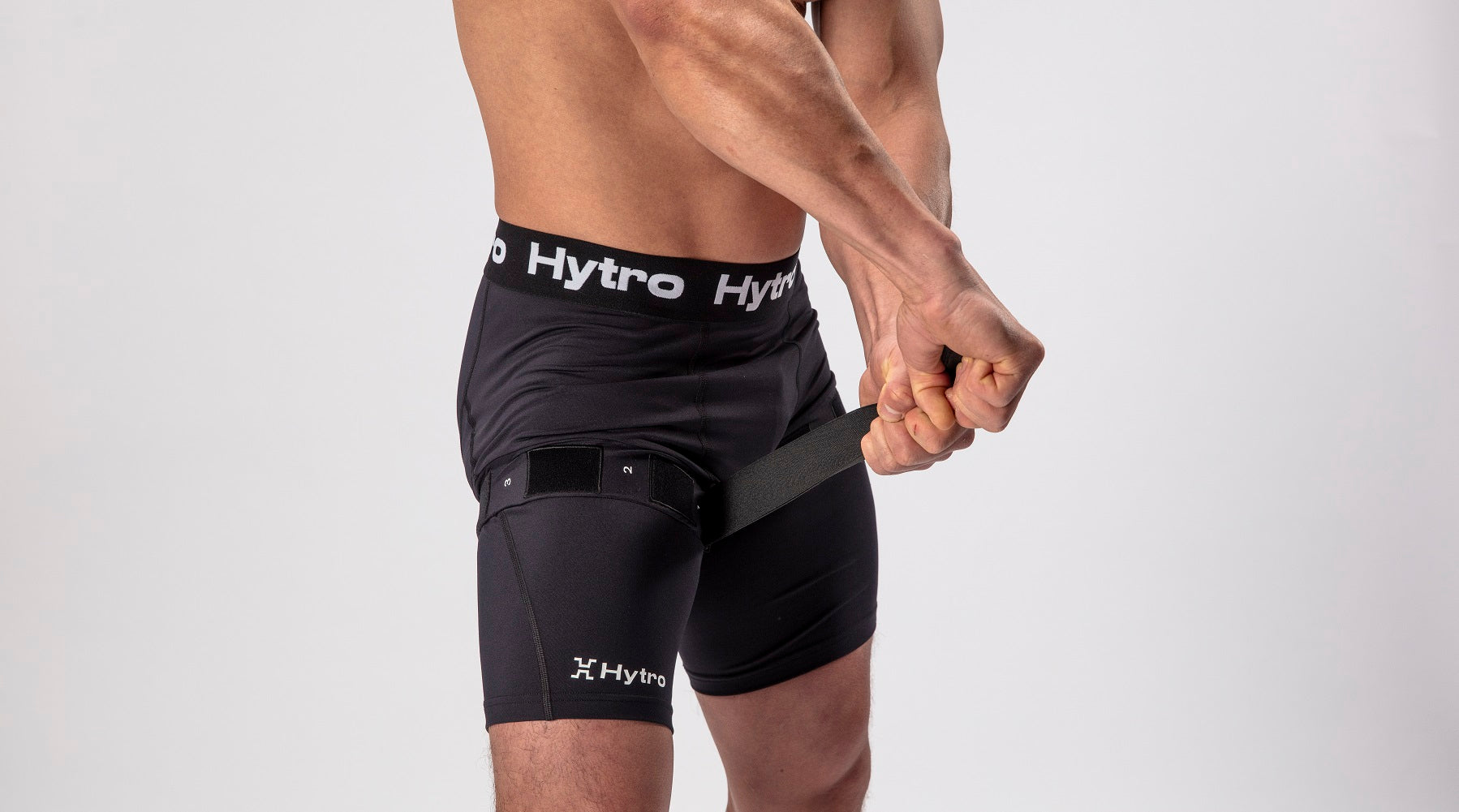
Hytro BFR became part of what the athletes were already doing. It showed up in warm-ups, in prehab work, in recovery sessions and even during travel. Athletes would use the wearables in film sessions, layering recovery into time that was already accounted for.
That approach removed friction and meant that adoption did not rely on additional motivation or discipline. It became normal.
Managing the in-season reality
As the season progresses, the balance between stimulus and recovery becomes harder to manage. There are moments where lifting needs to be reduced, where fatigue needs to be prioritised, and where maintaining output becomes the primary goal.
This is where BFR offers a practical solution.
“I’m able to give them an opportunity to better recover… and not always take the hit that we’re not lifting today.”
Rather than removing stimulus entirely, it allows for a different type of loading. One that supports recovery while still contributing to the overall training picture. It becomes a way of preserving qualities when traditional methods are not always possible.
Over time, those small moments begin to compound.
Kelly describes it as a multiplier for availability. Not through dramatic changes, but through consistent, repeatable interventions that help athletes feel better, recover faster and stay closer to their performance ceiling.

Pushing the ceiling
With a full season of experience, the focus is now shifting again.
Where Hytro BFR was initially used to support recovery and rehabilitation, it is now being explored as a tool to influence fast-twitch muscle recruitment and explosive performance. This is an area where gains are smaller and harder to find, but still critical at the highest level.
“We’re seeing what we can pull out… from a fast-twitch standpoint.”
It reflects a broader mindset within the programme. One that is not satisfied with maintaining standards but is constantly looking for marginal gains that can make a difference across a season.
Built to Outperform
For Kelly, the idea of being “Built to Outperform” is not tied to a single metric or outcome; it is rooted in consistency.
“I said it at the beginning… where can I keep them available, and then where can I push the needle a little bit more?”
Availability, repeatability, and the ability to sustain high-level performance over time are what ultimately separate athletes in this environment because, in the end, performance is not defined by what you can do at your best. It is defined by how often you can return to it.
Explore Hytro BFR wearables for women here.



Leave a comment
This site is protected by hCaptcha and the hCaptcha Privacy Policy and Terms of Service apply.