

Bridging the gap back to performance
Rehabilitation is about more than recovery. It is about returning athletes to performance as efficiently as possible.
One of the biggest challenges is maintaining muscle mass and strength when loading is restricted. Without intervention, losses can occur quickly, extending the timeline back to full performance.
What the research shows
BFR has been widely used in rehabilitation settings to preserve muscle mass and strength during periods of reduced loading.
Low-load BFR Training has been shown to stimulate muscle activation and support hypertrophy, even when traditional resistance training is not possible. It has also been used to reduce pain and support early-stage rehabilitation following injury.

What this means for coaches and practitioners
Rehabilitation can start earlier and progress more smoothly. Hytro BFR provides a way to introduce meaningful stimulus without compromising the healing process. This helps maintain physical qualities and reduces the drop-off that often occurs during injury. It also supports a more gradual transition back to full training.
How it shows up in practice
Hytro BFR can be introduced in early-stage rehab with low-load exercises, progressing alongside the athlete as their capacity improves.
It remains relevant through mid and late stages, helping bridge the gap back to full performance. This continuity is one of its key strengths.
Where Hytro fits
Rehabilitation often requires regular, repeatable interventions.
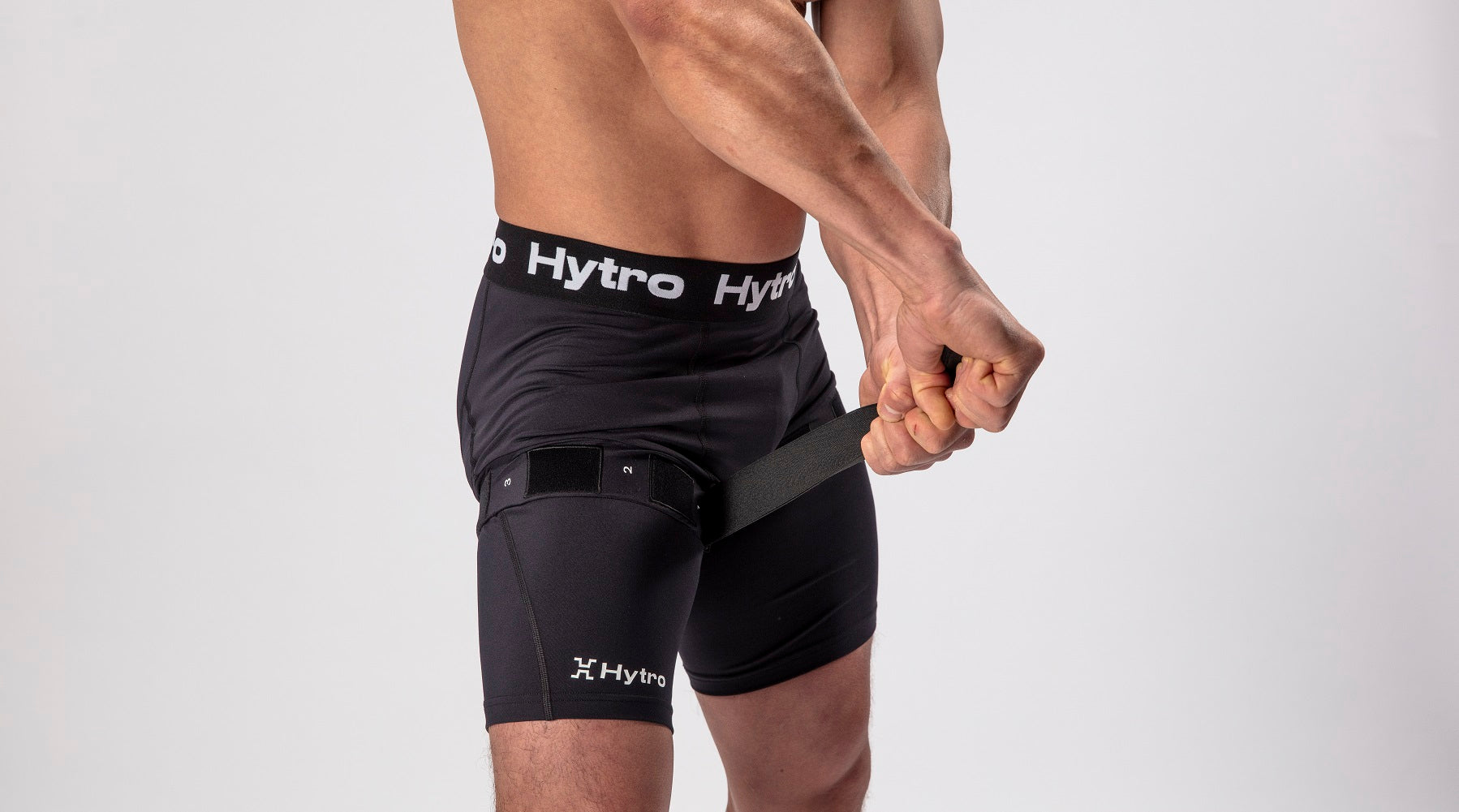
Hytro’s wearable system allows BFR to be used consistently throughout the rehab process, without reliance on specialist equipment or constant supervision. Athletes can apply it independently, increasing frequency and adherence.
Its portability also supports continuity, allowing BFR to be used across clinical, gym, and home environments. This helps create a smoother, more connected rehab process, where stimulus is maintained from early stages through to return to play.

Research references
Hughes L, Paton B, Rosenblatt B, Gissane C, Patterson SD. Blood flow restriction training in clinical musculoskeletal rehabilitation: a systematic review and meta-analysis. Br J Sports Med. 2017 Jul;51(13):1003-1011. doi: 10.1136/bjsports-2016-097071. Epub 2017 Mar 4. PMID: 28259850.
Explore more of the research behind BFR and its role in performance and recovery.



Leave a comment
This site is protected by hCaptcha and the hCaptcha Privacy Policy and Terms of Service apply.