

Maintaining performance deeper into games
In many sports, performance is not defined by a single effort, but by the ability to repeat it.
As fatigue builds, output begins to drop. Sprint speeds decrease, jump height declines, and decision-making is affected. The difference between players is often seen not in their peak performance, but in how well they sustain it.
What the research shows
BFR Training has been shown to increase metabolic stress and improve muscular endurance, both of which are key factors in fatigue resistance.
By challenging the muscle in a restricted oxygen environment, BFR promotes adaptations that improve the ability to sustain repeated efforts. This includes improved tolerance to fatigue and enhanced efficiency during submaximal work.
These adaptations are particularly relevant in sports that require repeated high-intensity actions.

What this means for coaches
Training for performance is not just about peak output, but about maintaining it. BFR offers a way to target the physiological factors that underpin fatigue resistance without adding excessive load. This allows coaches to develop athletes who can sustain performance across the duration of the performance, not just at the start.
It also provides an additional tool when managing training load, particularly in-season.
How it shows up in practice
BFR can be integrated into conditioning or strength sessions where the goal is to improve endurance under fatigue.
Low-load, high-repetition work or controlled conditioning intervals can be used to create the desired stimulus. These sessions are typically shorter but can be highly effective in targeting fatigue resistance.
Over time, this supports more consistent performance, particularly in the later stages of games.

Where Hytro fits
Fatigue-resistant work needs to be repeatable and accessible.
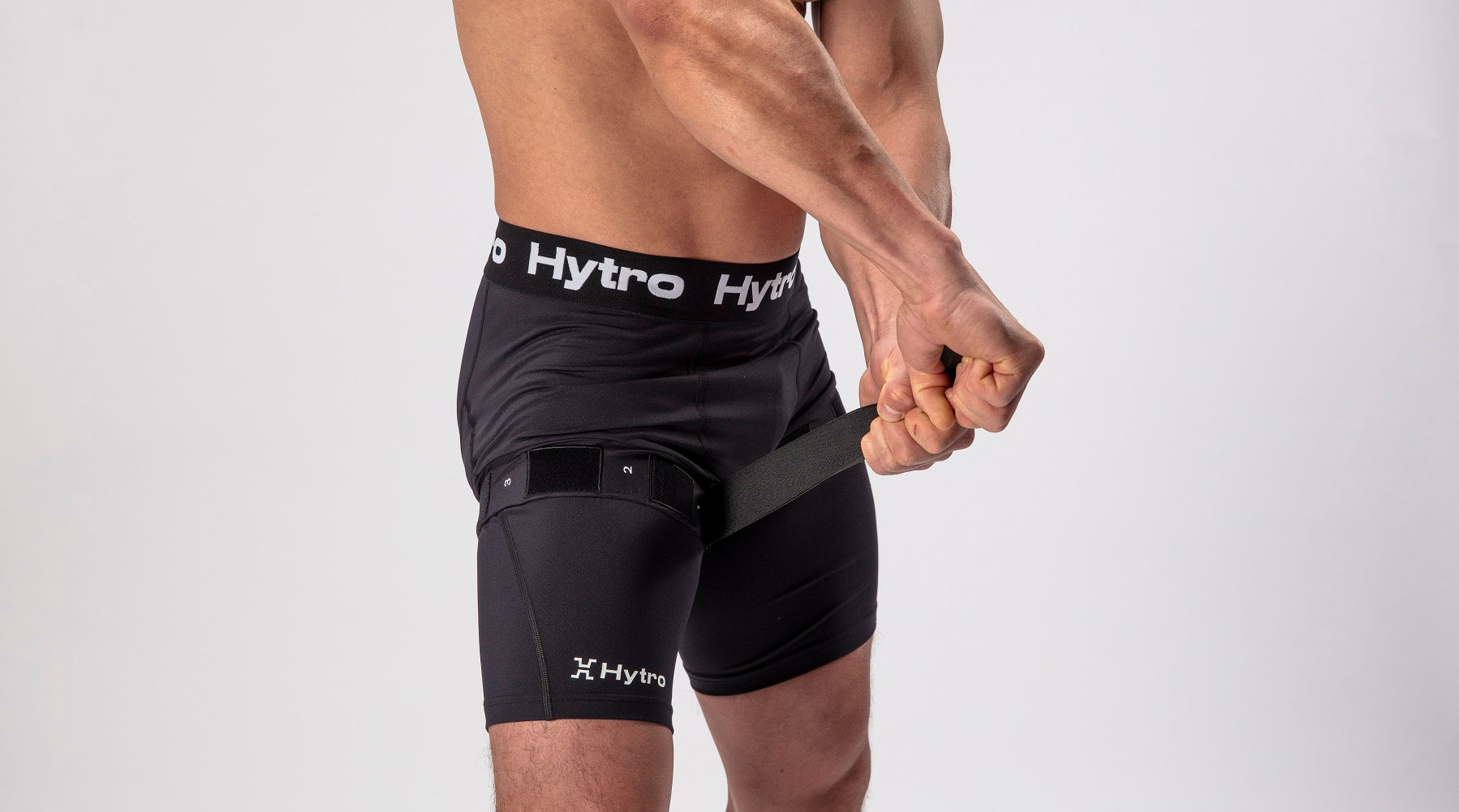
Hytro’s wearable system allows BFR to be used easily within conditioning or gym-based sessions, without adding complexity. Players can apply it independently, making it scalable across a squad and easy to integrate into existing programmes.
Because it is not tied to a fixed setup, it can also be used in a range of environments, including training, travel, or reduced facilities. This ensures that fatigue resistance work does not drop off when conditions change.
Consistency is key in developing these qualities. Hytro helps make that consistency achievable.
Research references
Christiansen et al. 2019, J Physiol (PMID 30843602): https://pubmed.ncbi.nlm.nih.gov/30843602/
Explore more of the research behind BFR and its role in performance and recovery.


Leave a comment
This site is protected by hCaptcha and the hCaptcha Privacy Policy and Terms of Service apply.