
In high-performance sport, innovation rarely happens in isolation. It is shaped through collaboration between practitioners and researchers, the lab and the training ground, and what is proven versus what is still being explored.
At Hytro, that belief has helped shape a growing global research network focused on advancing the understanding and application of Blood Flow Restriction (BFR). The company has now funded six full-time PhDs spanning areas including recovery, performance, physiology and product development.
While each project explores a different aspect of BFR, they are united by a common goal: to better understand how it works, how it can be applied and where it can go next.
“My own PhD, funded by England Rugby, shaped how I see the role of science in performance,” says Hytro founder Dr Warren Bradley. “Research shouldn’t sit isolated in a lab; it must translate into the real world where it matters.”
That philosophy has shaped Hytro’s approach to innovation from day one. The company has built a connected research ecosystem designed not only to push the science forward, but to keep it grounded in real-world practice.
Hytro Chief Scientific Officer Tom Brownlee believes the diversity of the research programme will be key to driving meaningful impact across sport and performance.
“We feel incredibly fortunate that the students we’ve attracted to our PhD research programmes are not only incredibly talented but are also passionate across such diverse areas,” says Tom. “Being able to investigate topics from female physiology to applied sport to lab-based work and beyond allows us such a breadth of discovery moving forward.”
Across the programme, the focus is not just on generating new research, but on ensuring the findings have practical value for coaches, practitioners and athletes. The aim is to better understand how BFR can be implemented effectively across different environments, populations and performance settings.

Starting with the real-world problem
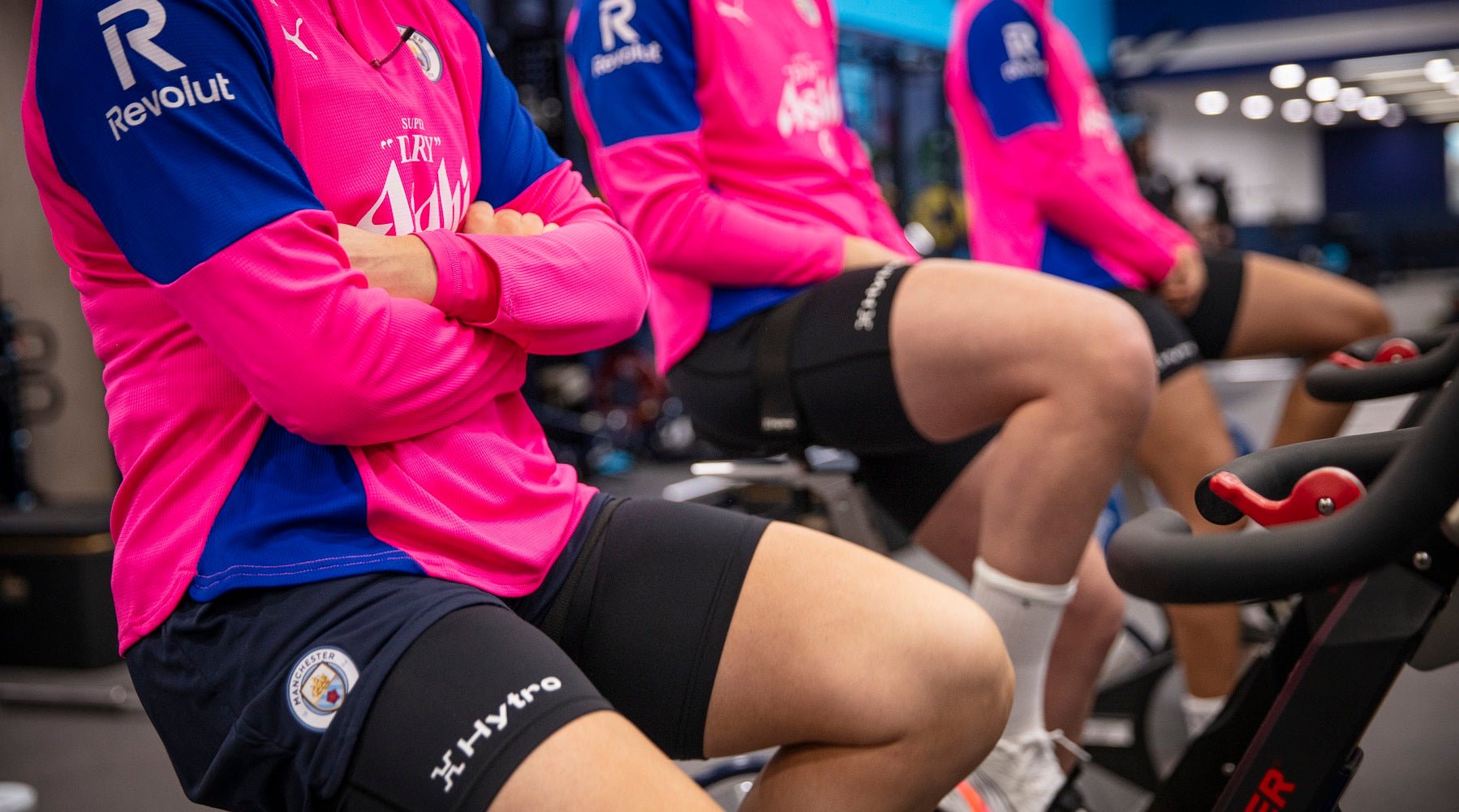
At the applied end of the spectrum is the work being led by Sandro Tito, a sports scientist embedded within a professional football environment and currently undertaking a PhD focused on recovery.
Rather than isolating BFR in a lab setting, his work centres on how it can be integrated into the realities of a season.
“My main objective is not only performing protocols in a controlled setting, but especially translating this to real-world practice, with all the constraints that come with it.”
That approach has already led to promising findings. By combining BFR with low-intensity cycling, his research has shown meaningful improvements in recovery markers, particularly when applied through intermittent protocols.
“We have been investigating the benefits of combining BFR with active recovery… the results were very interesting.”
What stands out is not just the outcome, but the direction. This is research designed to fit into team environments, not sit outside them.
Refining how recovery is applied
Alongside this, ongoing work is exploring how different BFR protocols influence recovery outcomes, including how timing affects effectiveness.
One of the consistent themes emerging from this research is variability. Across recovery modalities, protocols are rarely standardised, making it difficult to draw firm conclusions.
“There’s not a lot of evidence or consistency in protocol… It’s very difficult to compare even within a single modality.”
That gap is where much of the current work is focused. Not just asking whether BFR works, but how it should be applied to maximise its impact, whether immediately post-exercise or later, when soreness begins to develop.

Understanding what is happening beneath the surface
While applied studies continue to evolve, other projects are focused on the mechanisms that underpin BFR.
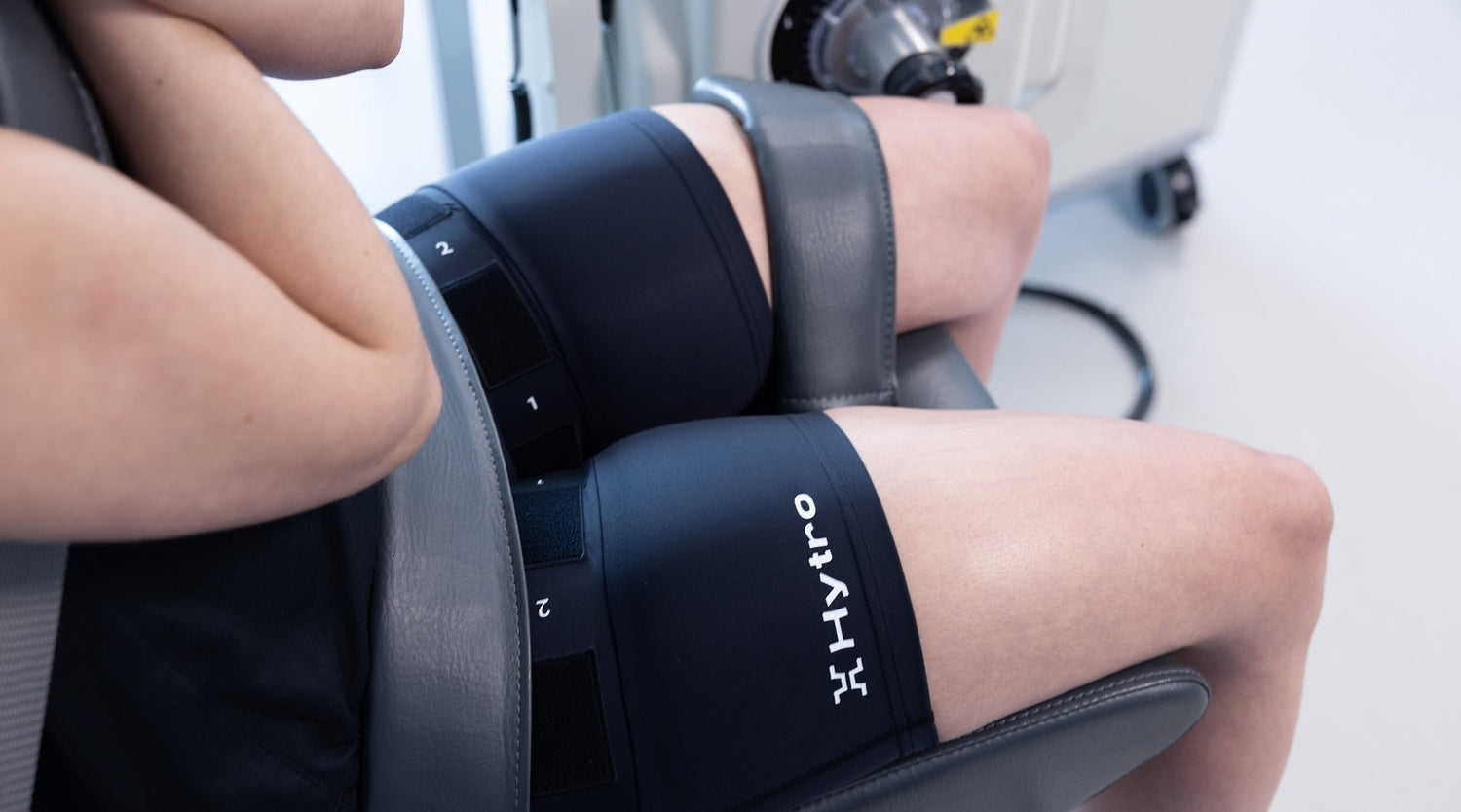
New research is investigating blood flow velocity and the physiological response to restriction and reperfusion, aiming to better understand what happens during and after occlusion.
These studies are designed to move beyond outcome-based observations and provide a clearer picture of how BFR influences the body at a vascular and cellular level.
At the same time, further work is exploring how BFR interacts with other recovery modalities, from active strategies such as cycling to passive methods including cold and contrast therapy. The goal is to understand not just individual effects, but how these approaches can be combined effectively.
Addressing the gaps in female athlete research
One of the most important areas of focus across the group is the lack of research in female athletes.
Current literature remains heavily weighted towards male participants, leaving significant gaps in understanding around safety, performance and physiological response in women.
Emerging work within the Hytro research group is aiming to address this directly, with projects investigating how BFR interacts with hormonal fluctuations and the menstrual cycle, as well as its implications for vascular safety.
“We don’t know how hormonal changes during the menstrual cycle affect BFR safety and performance… we need data to keep our athletes safe.”
This work has the potential to establish more informed, athlete-specific guidelines and represents an important step forward in making BFR research more representative of the athletes it is intended to serve.

From physiology to product
Beyond application and physiology, another strand of research is focused on the product itself.
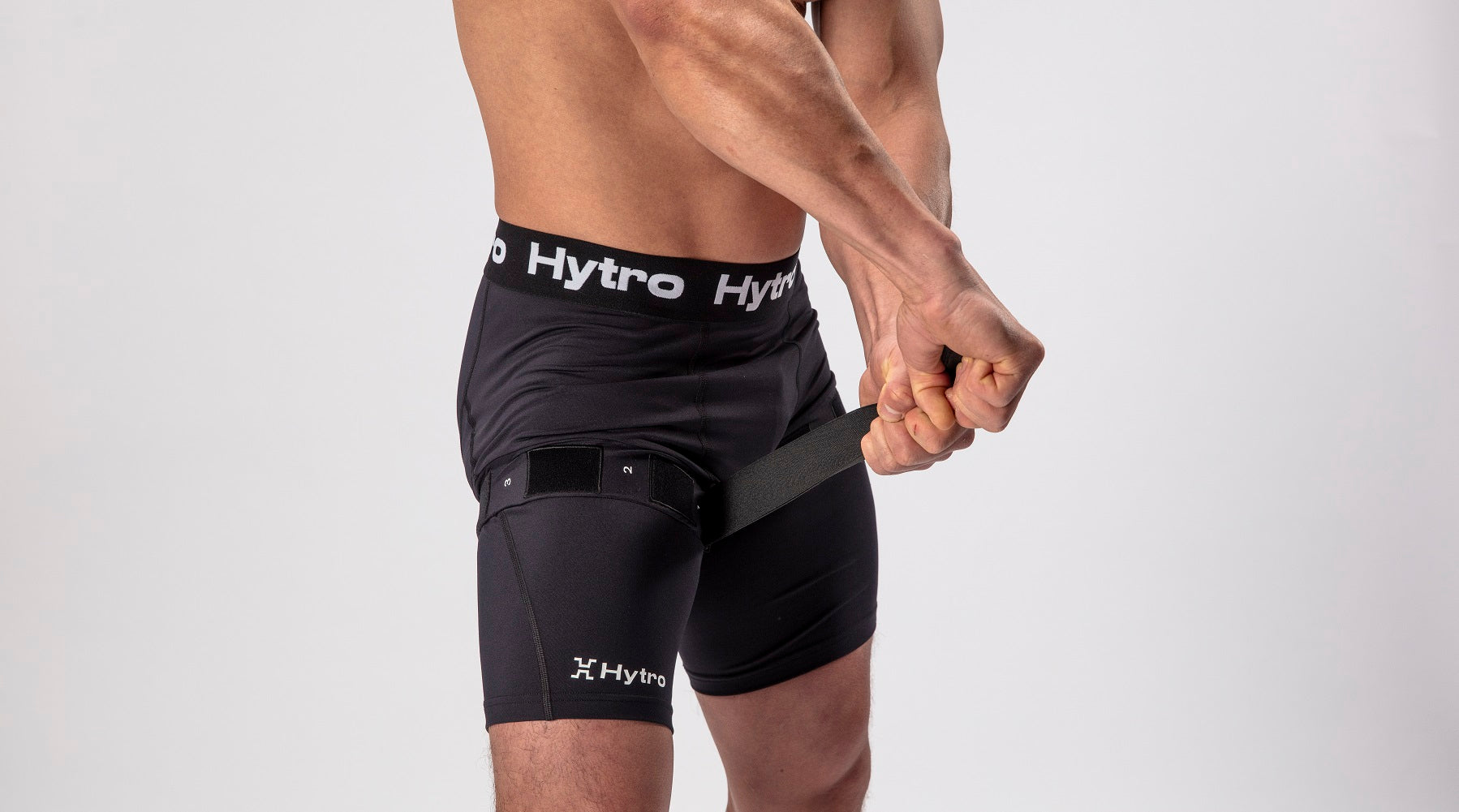
Mechanical engineering projects are currently modelling how BFR garments interact with the body, analysing how pressure is distributed across the limb and how materials behave during use.
The aim is to build a detailed understanding of how the device performs under different conditions, from changes in body composition to prolonged use over time.
This level of insight allows for more informed product development, reducing reliance on trial and error and enabling faster, more precise iteration.
Alongside this, exploratory work into smart textiles is looking further ahead, examining how emerging technologies could be integrated into garments to enhance functionality and feedback.
A connected approach to innovation
What becomes clear when looking across these projects is the breadth of the work, but also how connected it is.
From applied recovery protocols to vascular physiology, from female athlete research to material science, each area contributes to a broader understanding of BFR.
For Hytro, this is not about a single study or a single claim. It is about building a foundation of knowledge that supports both current application and future development.
It also reflects a shift in how performance technology is evolving. Not driven by isolated innovation, but by collaboration between disciplines.
Looking ahead
Many of these studies are still ongoing, with findings expected over the coming months and years. But even at this stage, the direction is clear.
BFR is moving beyond its early use cases and becoming part of a more integrated performance strategy. At the same time, the understanding of how it works and how it can be improved continues to deepen.
By investing in both sides of that equation, application and research, Hytro is positioning itself not just within the conversation, but at the centre of where it is heading next.


Leave a comment
This site is protected by hCaptcha and the hCaptcha Privacy Policy and Terms of Service apply.