

In high-performance sport, there are periods where ideal training conditions are not available. Travel schedules, fixture congestion, limited access to equipment, or reduced player readiness can all restrict the ability to load athletes in the way coaches would typically want.
Over time, this creates a risk. Without sufficient stimulus, strength and muscle mass begin to decline, which can impact performance, resilience, and injury risk. The challenge is not knowing what to do. It is finding a way to maintain or build physical qualities within those constraints.
What the research shows
Blood Flow Restriction (BFR) has consistently been shown to drive strength and hypertrophy adaptations using significantly lower loads than traditional resistance training.
Studies have shown that training at 20 - 30% of one-repetition maximum with BFR produces meaningful increases in muscle size and strength, well beyond what the same light loads achieve without it. This is driven by the local metabolic stress created through restricted venous return, which stimulates muscle activation and anabolic signalling pathways.
Importantly, this allows meaningful training adaptations to occur without the same mechanical strain on joints and connective tissue.
In applied settings, this has made BFR particularly useful during periods of reduced loading, including travel, taper phases, and congested schedules where heavy resistance training is not practical.

What this means for coaches
Strength and hypertrophy are no longer dependent on ideal conditions.
When access to heavy loading is limited, BFR provides a viable alternative that still delivers a meaningful stimulus. This reduces the drop-off that can occur during periods of constraint and allows players to maintain key physical qualities throughout the season.
It also adds flexibility to programming. Coaches are no longer restricted to gym-based sessions to deliver strength work, which opens up more options when time, space, or equipment are limited.
How it shows up in practice
In practice, BFR can be used to replace or supplement traditional strength sessions when loading needs to be reduced.
Low-load exercises can be programmed using bodyweight, resistance bands, or light external loads, making sessions easy to deliver in a wide range of environments. This is particularly valuable during travel or in settings where access to a full gym is not available.
It can also be used in short, targeted sessions to maintain stimulus without adding significant fatigue. These sessions are typically brief and can be integrated around training without disrupting the wider schedule.
Over time, this helps preserve muscle and strength, even when traditional training options are limited.

Where Hytro fits
For BFR to be effective in constrained environments, it needs to be practical, portable, and easy to use.
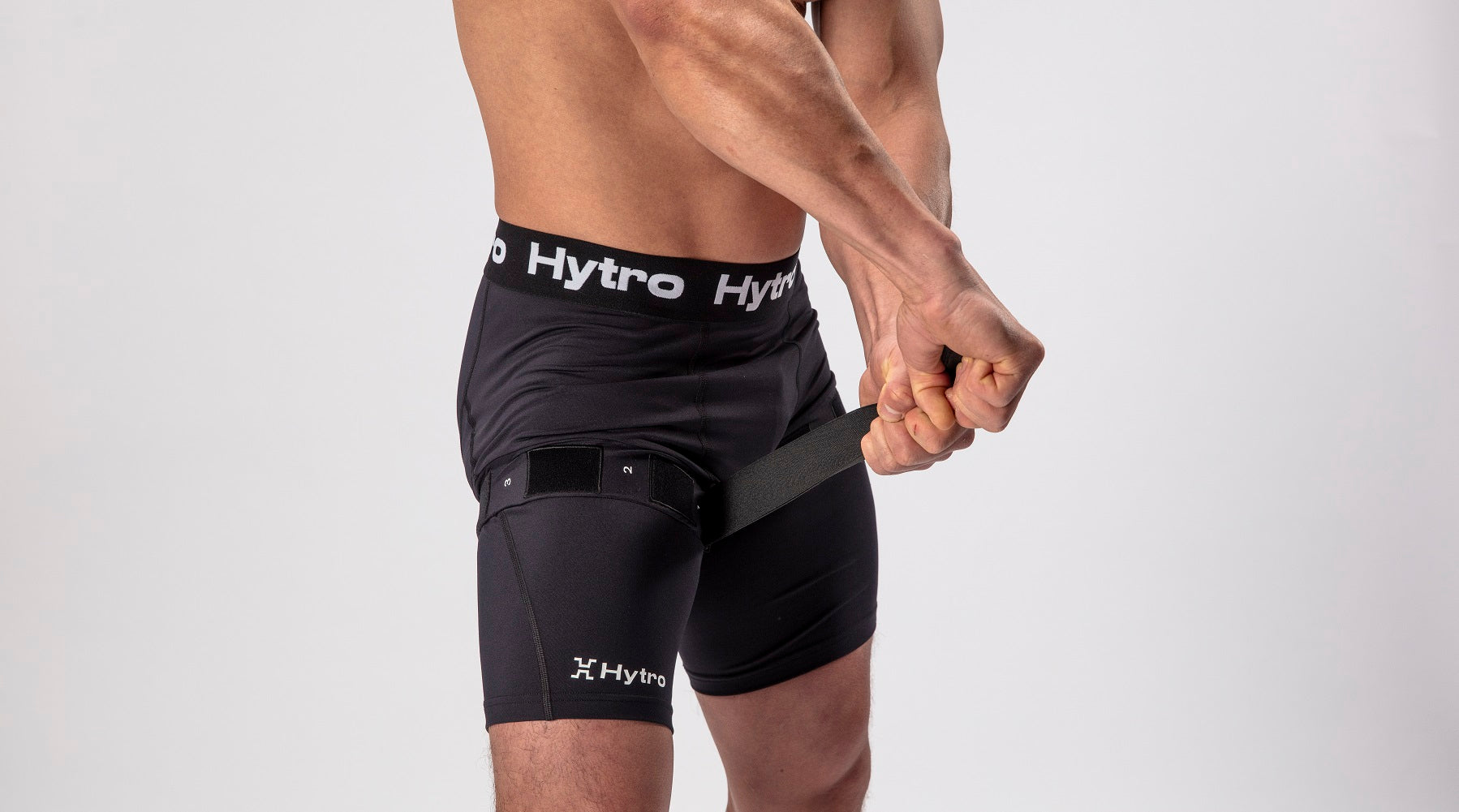
Hytro’s wearable BFR system is designed to meet those demands. It allows players to apply BFR independently, without needing fixed equipment or supervision, which makes it suitable for use beyond the gym environment.
This is particularly important during travel or congested periods, where access to facilities can be inconsistent. With a wearable system, players can maintain strength and hypertrophy work wherever they are, whether that is in a hotel room, at a training ground, or around a reduced schedule.
It also supports consistency across the squad. Rather than strength work being limited to those with access to specific setups, every player can follow the same approach, ensuring a more uniform standard of physical preparation.
Most importantly, it keeps training moving forward.
When ideal conditions are not available, progress often stalls. Hytro provides a way to maintain momentum, ensuring that strength and muscle are not lost during the periods where they matter most.
Explore how this translates into return-to-performance environments, as Charlie Holland navigates rehab and recovery, using BFR to rebuild capacity, restore confidence, and support the transition back to full performance.
Research references
Loenneke JP, Wilson JM, Marín PJ, Zourdos MC, Bemben MG. Low intensity blood flow restriction training: a meta-analysis. Eur J Appl Physiol. 2012 May;112(5):1849-59. doi: 10.1007/s00421-011-2167-x. Epub 2011 Sep 16. PMID: 21922259.
Explore more of the research behind BFR and its role in performance and recovery.


Leave a comment
This site is protected by hCaptcha and the hCaptcha Privacy Policy and Terms of Service apply.