

By Jonah Rosner, Performance Coach & Sports Science Educator
Endurance athletes have always looked to altitude training to build aerobic capacity, but it comes with a long list of barriers. It’s expensive, time-consuming, and not exactly practical unless you live near the mountains or are willing to sleep in a tent.
That’s where Performance BFR becomes interesting. It can create many of the same muscle-level adaptations that athletes chase at altitude, but without having to change your environment or disrupt your training week. As the research continues to develop, we’re now seeing how effective BFR can be for improving VO₂ max through peripheral adaptation alone.
Here’s how it stacks up against altitude and how you can use it to strengthen your aerobic engine at sea level.

What’s actually happening in the body
Both altitude training and BFR revolve around oxygen stress, but they apply that stress in very different ways.
Altitude: The System-Level Stressor
When you train at altitude, the drop in oxygen pressure triggers the body to increase EPO, red blood cell production, and haemoglobin mass. These are central adaptations that boost how much oxygen your blood can carry.
At the same time, training in thin air also creates muscle-level hypoxia. This drives increases in:
• capillary growth
• mitochondrial density
• oxidative enzymes
These changes help your muscles use oxygen more efficiently. But the size of the response varies; genetics, altitude level, and programme structure all play a role. Some athletes get big peripheral gains; others mostly improve from the blood side.
BFR: The local stressor
With BFR, you’re not changing the air; you’re changing the blood flow to a specific muscle. Restricting venous return creates localised hypoxia, triggering:
- increased capillarisation
- higher mitochondrial density
- activation of HIF-1α
- increased VEGF
All of this happens without needing to train at altitude. Unlike altitude training, BFR does not affect haemoglobin mass. The adaptations are entirely local.

The science on VO₂ Max improvements
Altitude training
Live-high-train-low (LHTL) can improve VO₂ max by 5–13 percent in elite athletes after 2–4 weeks. But response is highly individual. Around 40 percent of athletes are considered non-responders.
Most of the improvement comes from increased oxygen-carrying capacity, not from changes in the muscle.
What BFR can deliver
BFR improves VO₂ max through the opposite mechanism: better oxygen extraction and utilisation.
Studies show:
- 6–13% improvements in VO₂ max
- Effective even in trained athletes
- Achievable through simple low intensity cycling or running sessions
I’ve seen similar results in my coaching. Runners often feel a “stronger engine” effect within a few weeks, not because they have more red blood cells, but because their muscle tissue is more efficient.
Runners often feel a “stronger engine” effect within a few weeks, not because they have more red blood cells, but because their muscle tissue is more efficient.
Altitude vs BFR side by side
|
Feature |
Altitude Training |
Performance BFR |
|
Primary adaptation |
↑ Haemoglobin mass |
↑ Oxygen utilisation in muscle |
|
VO₂ max improvement |
5–13% |
6–13% |
|
Time required |
2–4 weeks living high |
15–20 min, 2–3× weekly |
|
Cost |
£3,000–8,000 |
< £500 |
|
Best for |
Elite or altitude-bound athletes |
Everyday runners & hybrid athletes |
|
Risks |
AMS, poor sleep |
Mild discomfort |
Both methods work, they just target different sides of the adaptation process.
Why endurance athletes are turning to BFR
“Altitude-like” stimulus without the altitude
BFR triggers the same muscle-level hypoxia-driven adaptations you see at altitude, but without systemic exposure. As Dr Richard Ferguson at Loughborough puts it:
“BFR exercise presents an intensified training stimulus beyond that of performing the same exercise alone.”
Endurance gains without extra mechanical stress
Because BFR uses low loads and low intensities, athletes can keep building aerobic qualities without adding joint or connective tissue fatigue. It’s perfect during heavy training blocks or when managing niggles.
It saves time
A short BFR aerobic session can deliver a meaningful stimulus. This makes it extremely useful for hybrid athletes balancing multiple training demands.

How to use BFR to improve VO₂ Max
Low-Intensity Aerobic BFR
- Walk or cycle lightly while strapped in
- 5–10 minutes continuous, or 3–4 × 2–3 minute bouts
- Pressure: 40–50% AOP (strap 1–2)
- Frequency: 2–3× weekly
- Goal: improve capillary density and oxygen-use efficiency
BFR Intervals
- 30 sec fast / 30 sec easy
- 3–4 sets, ~15 minutes total
- 50–60% AOP
- Goal: improve lactate tolerance and aerobic power
Post-Workout (Recovery) BFR
- After hard runs or strength sessions
- 3–4 cycles of 5 minutes on, 2 minutes off
- Goal: stimulate VEGF and recovery-related blood flow
Tightness should feel like a firm pump, not pain, around 7/10.
Quick summary: BFR vs altitude for VO₂ Max
- Altitude improves oxygen delivery (red blood cells).
- BFR improves oxygen extraction (muscle efficiency).
- Both can increase VO₂ max by 6–13% through different mechanisms.
- BFR offers similar peripheral benefits to altitude but is far more accessible.
- Altitude still matters if you’re racing at elevation or targeting haemoglobin mass.
Altitude training will always have a place in endurance sport. If you need to increase haemoglobin mass, it’s still the go-to method. But for most runners and hybrid athletes, the biggest performance gains often come from improving how the muscles use oxygen, not just how much oxygen the blood can carry.
But for most runners and hybrid athletes, the biggest performance gains often come from improving how the muscles use oxygen, not just how much oxygen the blood can carry.
That’s why BFR is such a useful tool. It gives you a practical way to create a strong aerobic stimulus without the cost, the travel, or the fatigue that usually comes with chasing these adaptations.
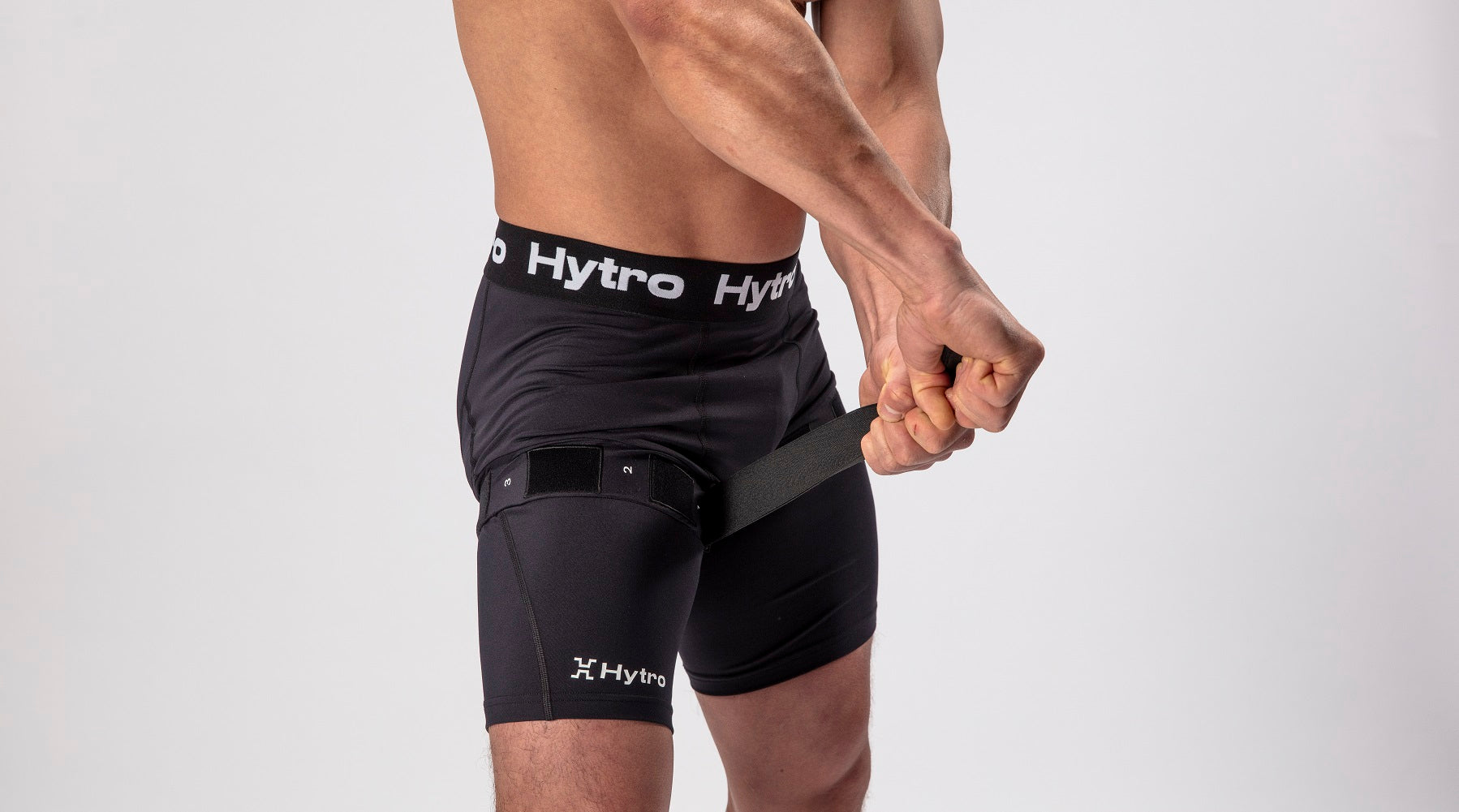
I use Hytro Performance BFR wearables because they make these sessions incredibly simple to integrate into a training week. If you’re looking to build a more efficient aerobic engine, BFR is one of the most effective tools you can add.



Leave a comment
This site is protected by hCaptcha and the hCaptcha Privacy Policy and Terms of Service apply.